Too vivid for black and white, the Orpheum Theatre originated as the Cook Theatre in 1921.
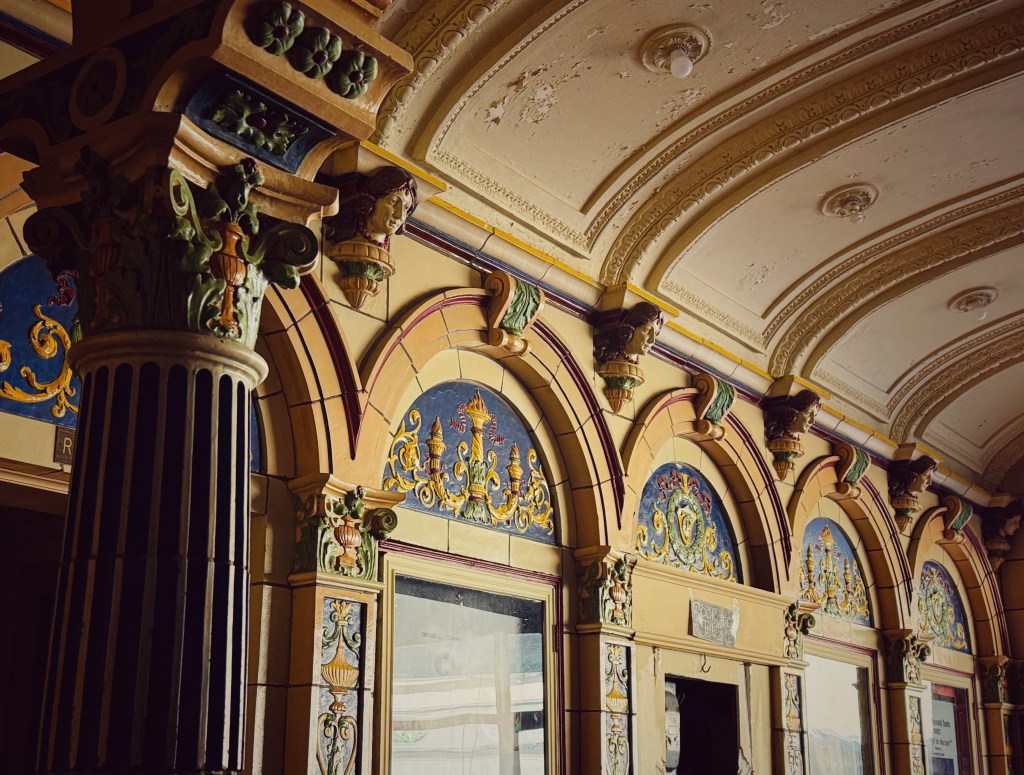
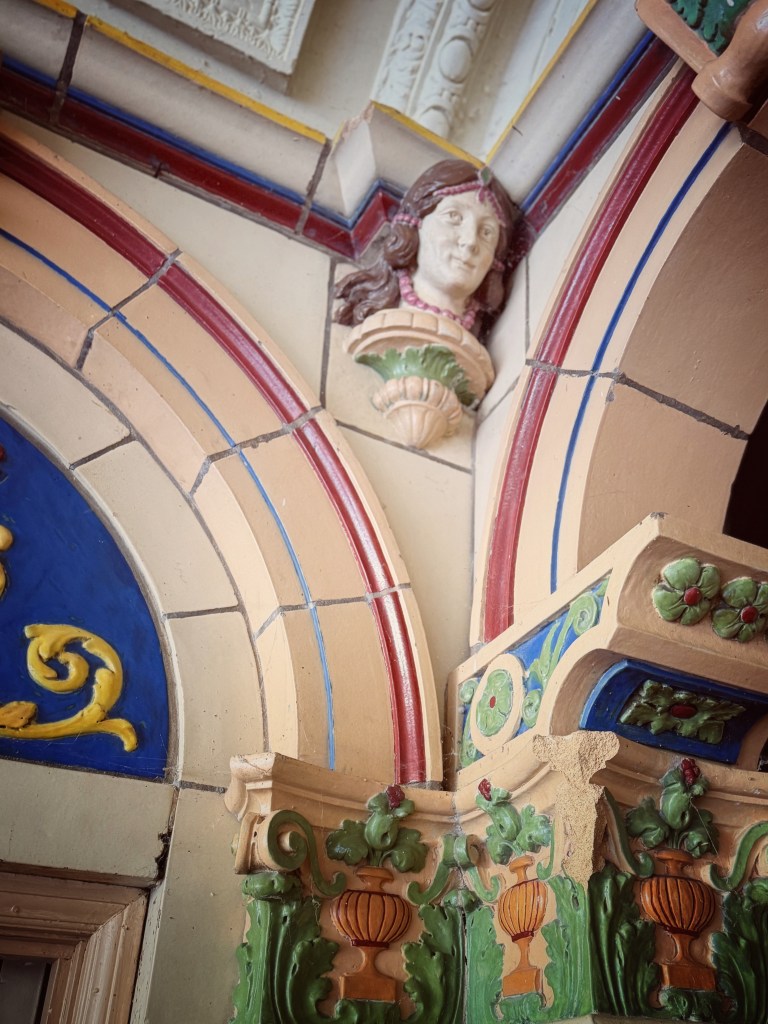
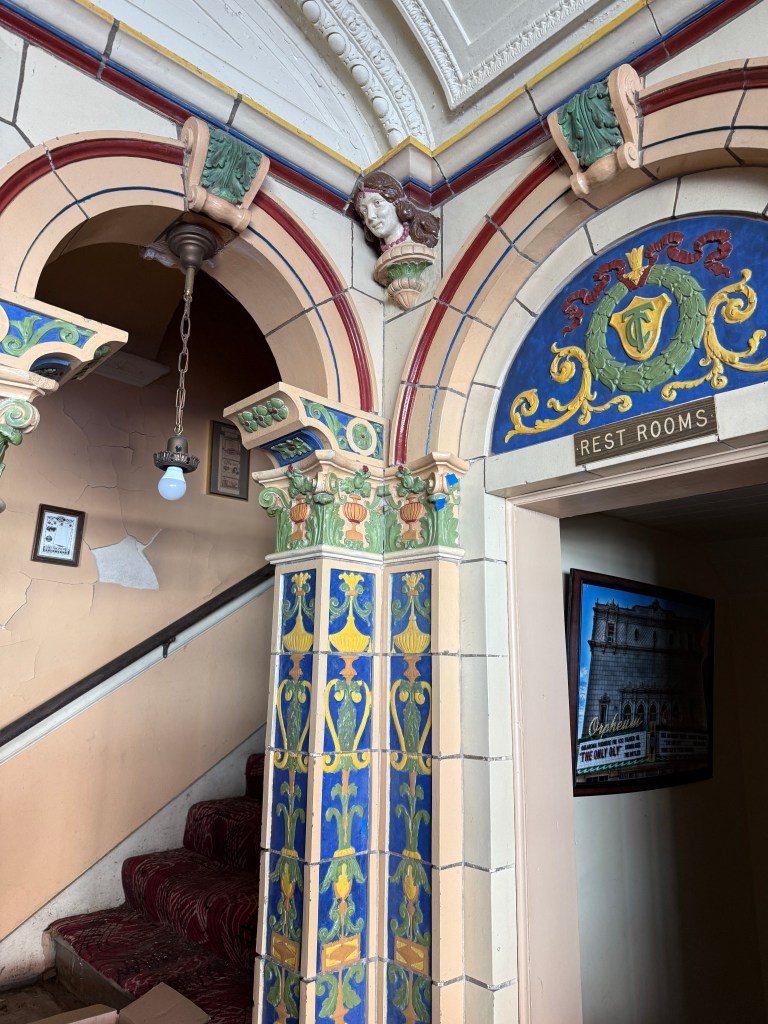
From the National Register of Historic Places (Okmulgee Downtown Historic District, 1992, #92001693): “Cook/Orpheum Theater. 210 W. 7th. Built 1921. The Cook/Orpheum Theater is an excellent example of the Spanish Baroque Revival style of architecture. The entire front facade of the building is faced in cream terra cotta. The upper level of the theater has an elaborate entablature featuring diamond-pane terra cotta work, Solomonic columns, portal windows, a low-relief frieze, and a stepped parapet with a flamboyant cartouche. ‘Cook Theater” is centered in the entablature. Directly above the marquis is a band of five windows recessed within arched surrounds with fluted columns with composite capitals. Above the capitals is an intricate, low-relief frieze. A cornice of swag and drop is also incorporated into the band of windows. Interior features include a polychromatic terra cotta lobby with Solomonic columns, portal windows, and gargoyles (comical/dramatic faces). The building retains a high degree of architectural integrity and appears to be individually eligible for listing in the National Register.”
The theater was built in 1921 by L. H. D. Cook and designed by Leon B. Senter. Senter came to Okmulgee as a branch manager for the firm of Smith, Rea, Lovitt and Senter from Kansas City, Missouri, in 1915. He continued to work with Smith after he moved to Tulsa and designed the Philcade Building in 1930 for Waite Phillips. Senter was the first architect to be licensed in Oklahoma.
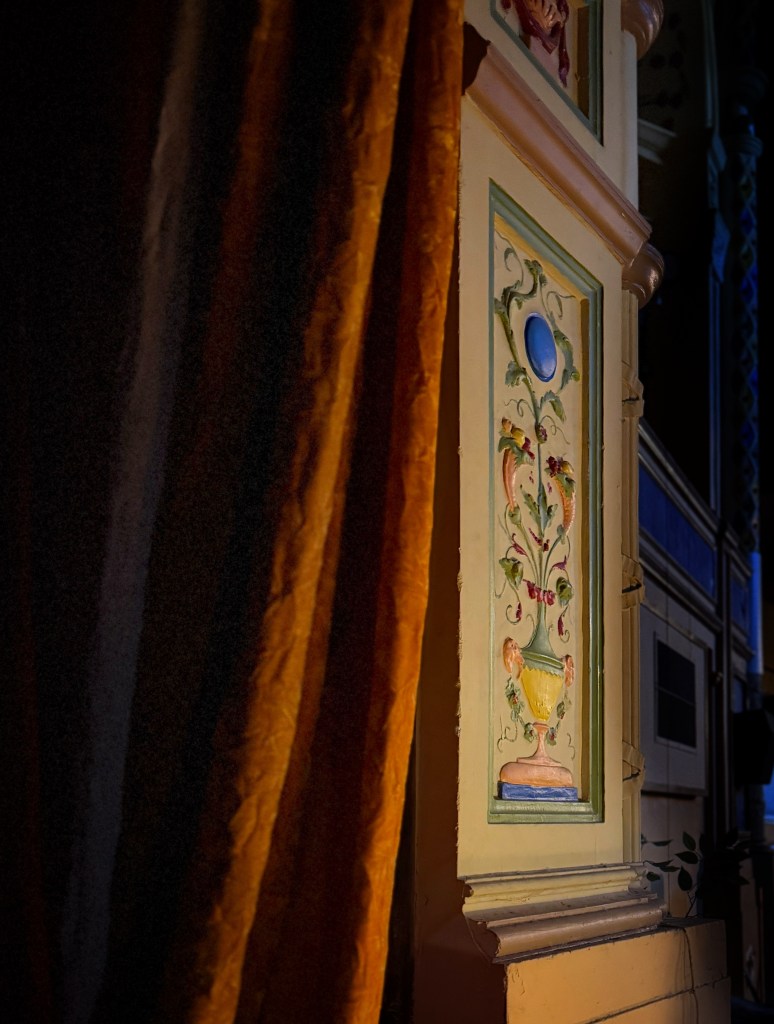
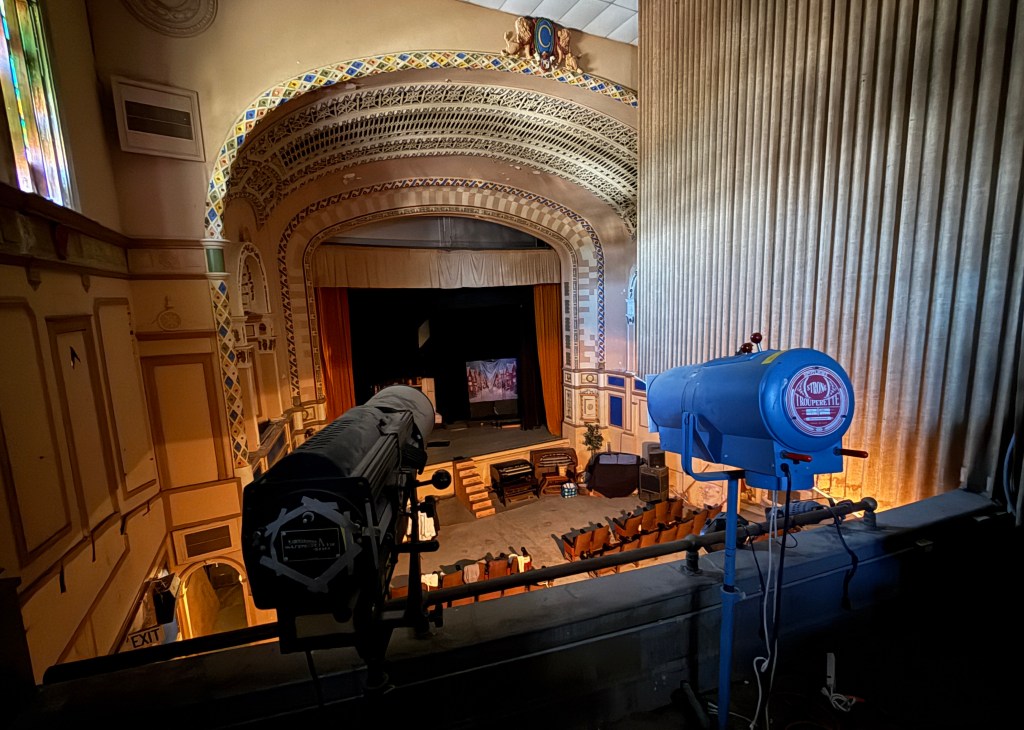
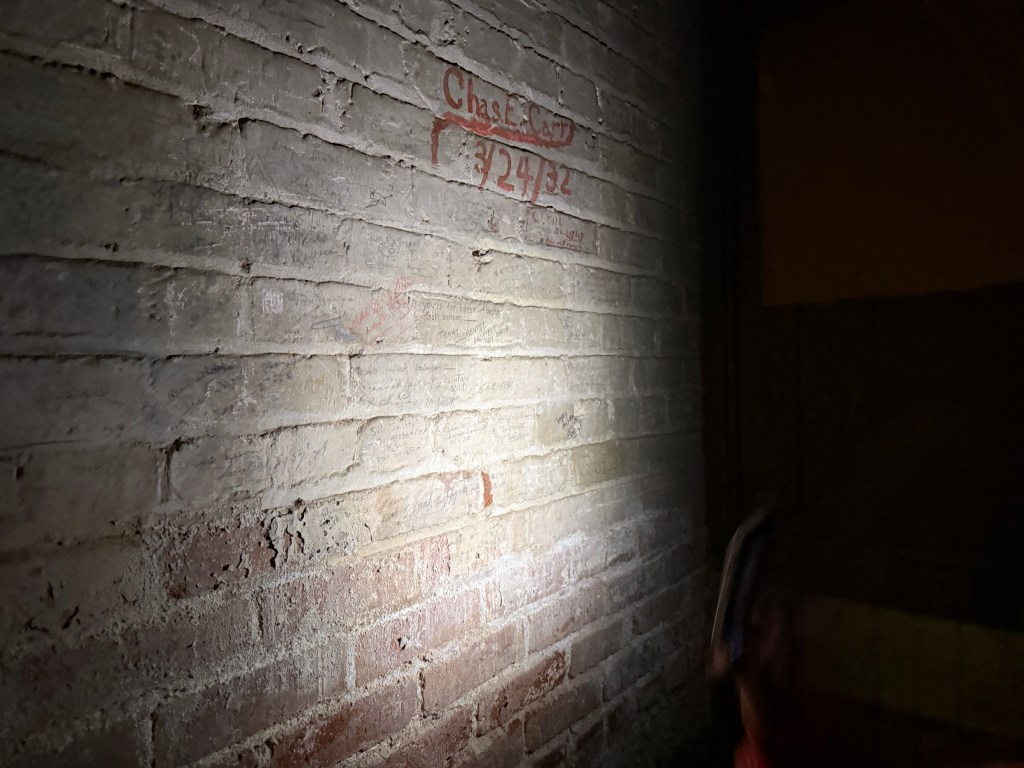
The theater represents the most elaborate derivation of Spanish architecture, the Spanish Baroque Revival, in downtown Okmulgee. The entire facade and the lobby are clad with terra cotta. Solomonic columns, portal windows, and gargoyles (comical/dramatic faces) provide rich ornamentation. Its elaborate terra cotta exterior and interior remain intact and it is an excellent example of an early twentieth century vaudeville theater. The backstage remains unchanged and has the original backdrop curtain, the orchestra pit, and the actors’ changing rooms.
 Vanishing Spaces
Leave a comment