The Spillway
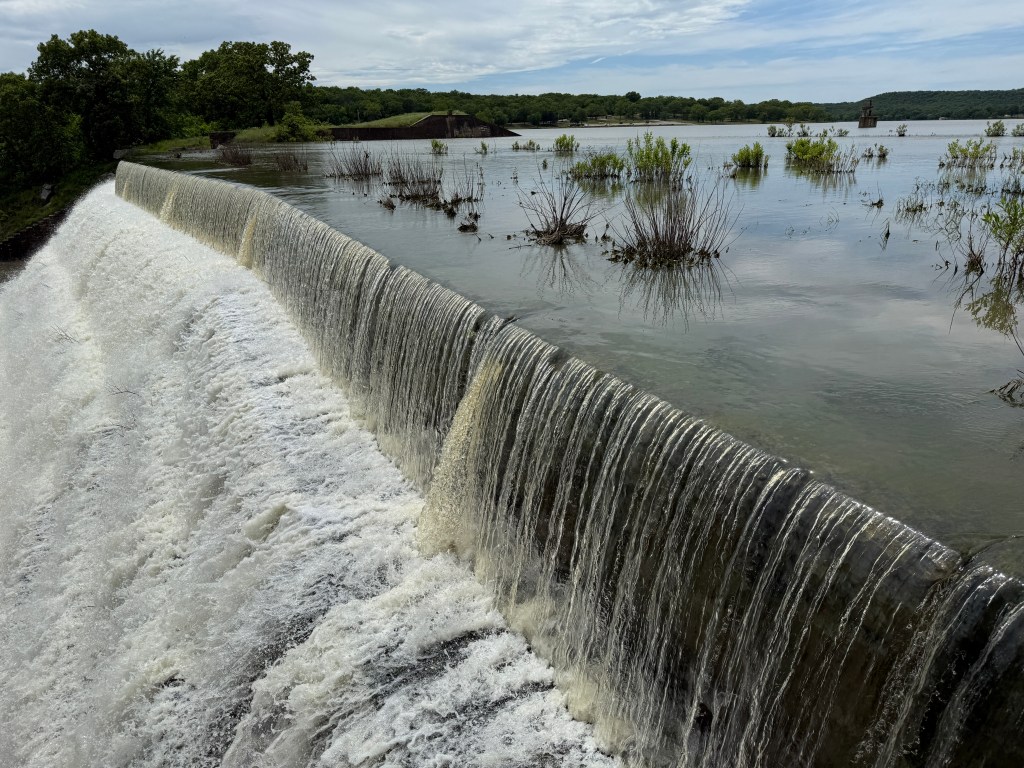
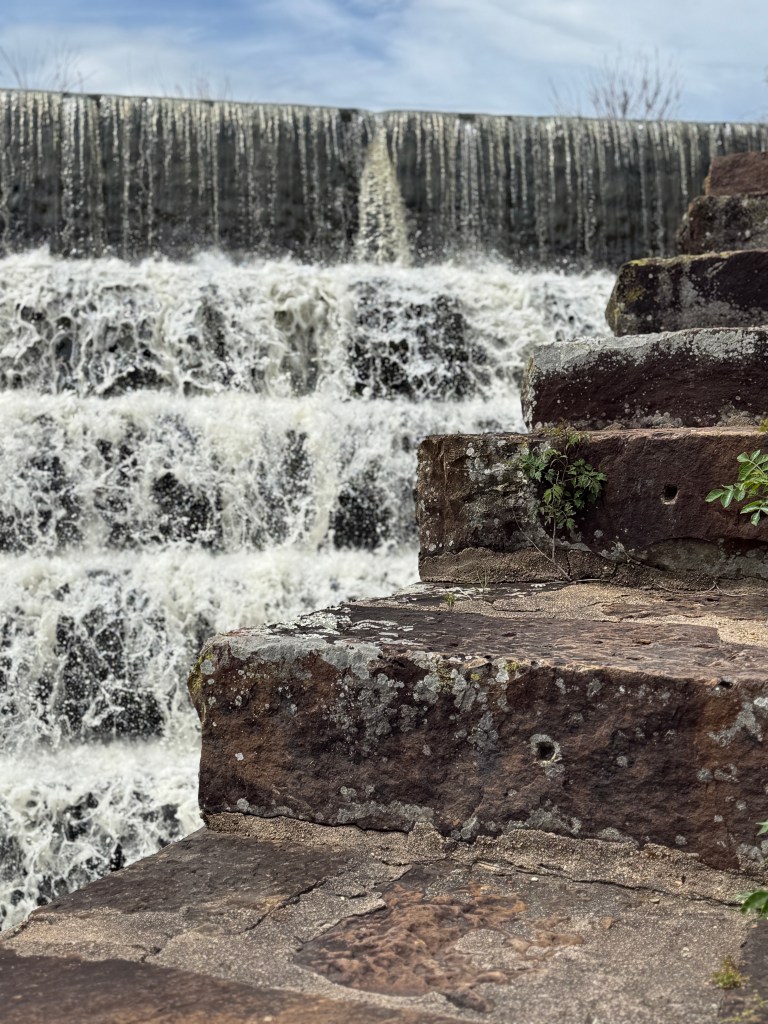
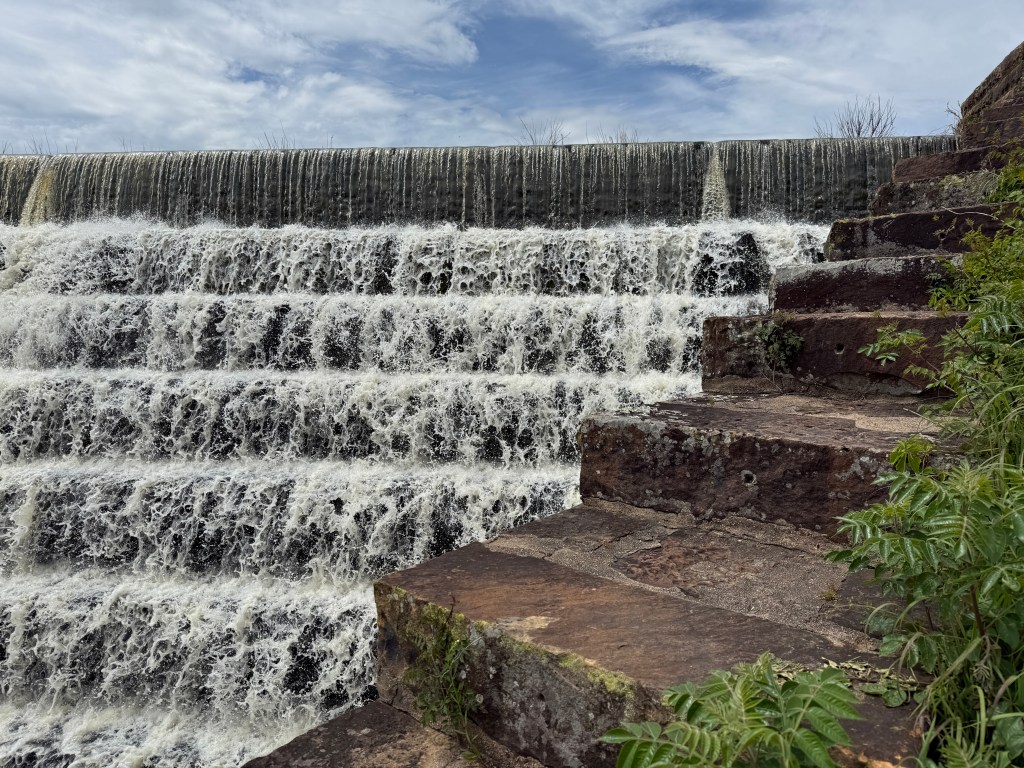
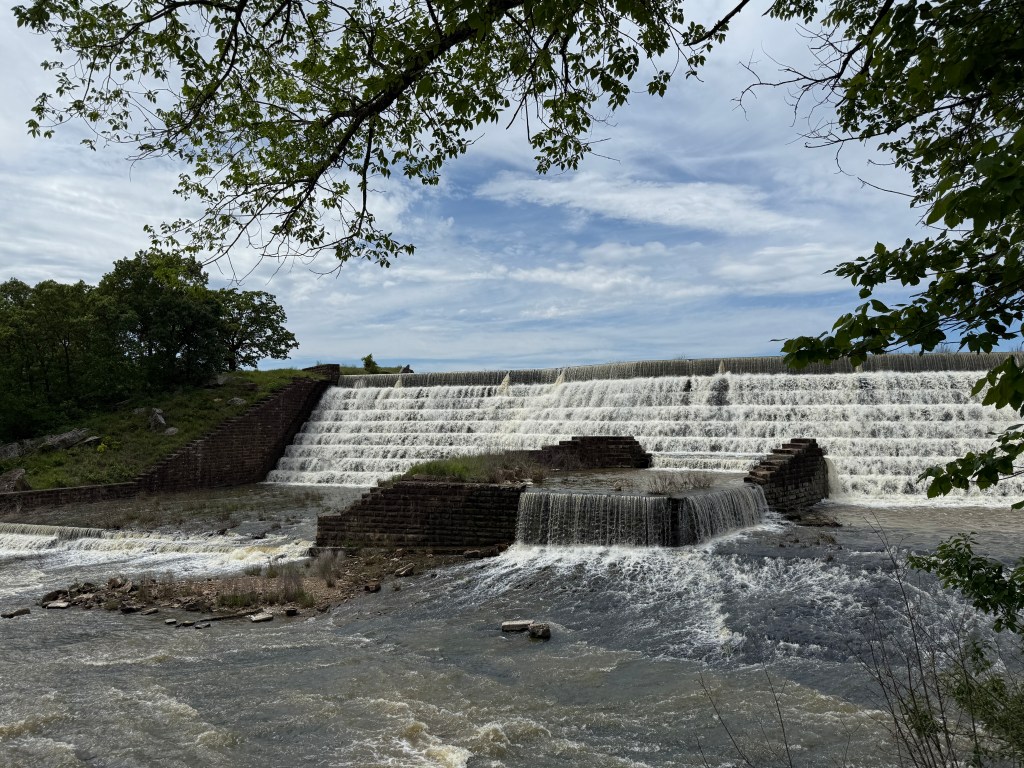
A “scenic masterpiece” built by the Works Progress Administration from 1939 to 1940, the Lake Okmulgee Spillway is the lake’s most iconic structure. “The strongly utilitarian aspect of the spillway is relieved by the waterfall effect of the contours of the cascade, which looks almost natural as it steps upward along the face of the spillway,” says the 1998 nomination of the spillway for listing on the National Register of Historic Places. For many present and former Okmulgeeans, it represents one of the most memorable spots in the county, and after a good rain, word that the “spillway is coming over” prompts many to make the six-mile trip from town to stand in awe of the waters gushing over the gigantic limestone edifice, forty feet high and two hundred fifty feet long.
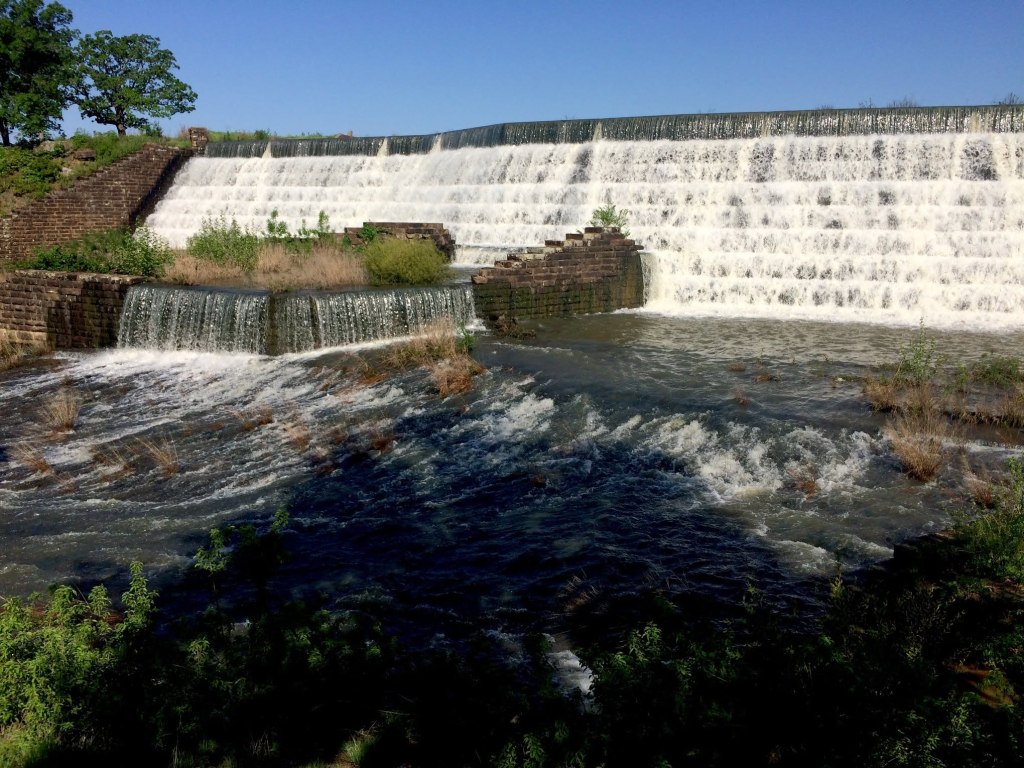
Lake Okmulgee was built in 1927 and ’28 to stem the floodwaters of Salt Creek and provide an improved water supply to the community. Its dam of rammed earth stretches 1,600 feet across the canyon of Salt Creek. It was completed and dedicated on the Fourth of July, 1928, and the resulting lake covers 720 acres to an eighty-foot depth. But the original 1928 spillway, faced with rock slabs, proved unable to contain the rush of floodwater during heavy rains while preserving the integrity of the earthen dam. Several disastrous floods between 1930-35 almost resulted in the loss of the dam and did wash out the adjacent highway. This prompted the City of Okmulgee to seek the help of the WPA to reinforce the spillway portion of the dam. The existing stone cascade is the result of that collaboration.
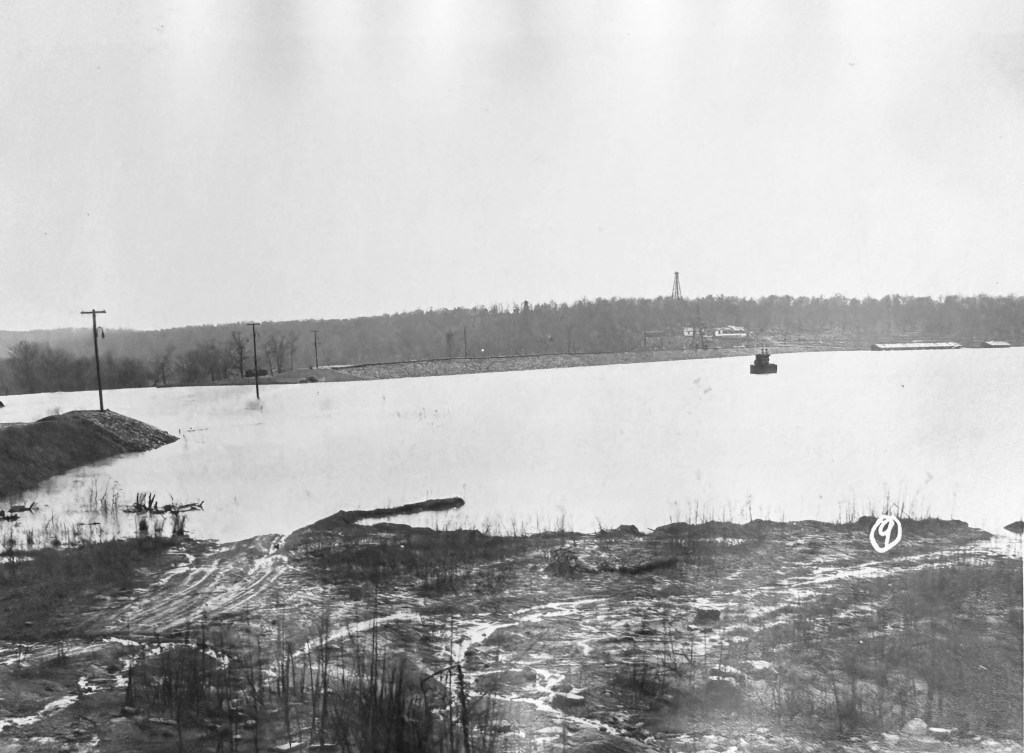
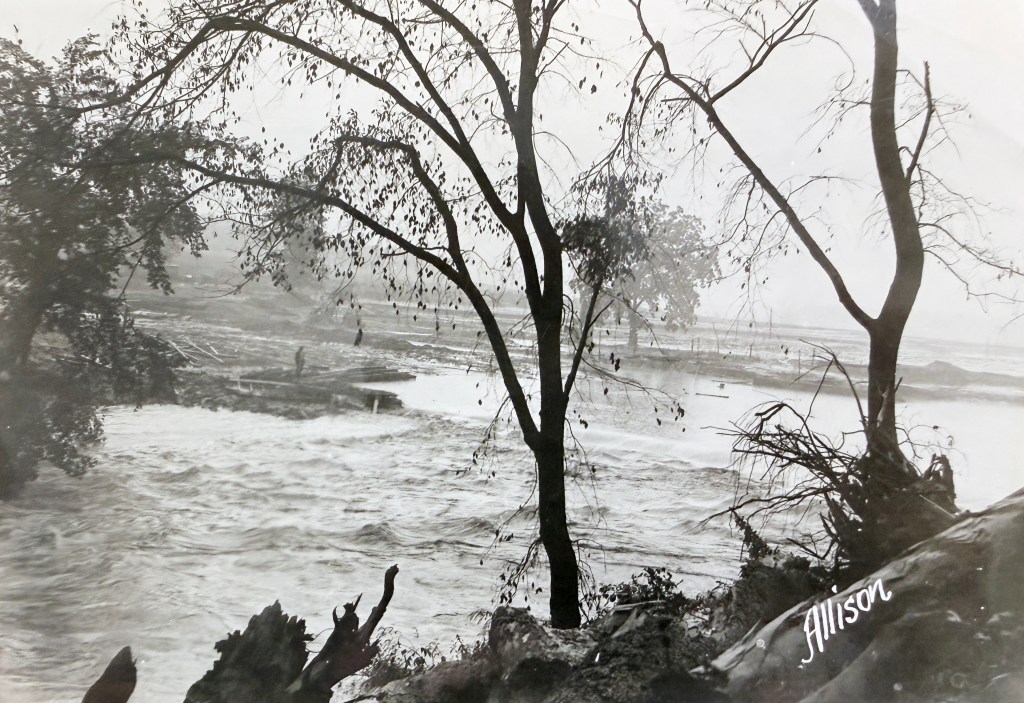
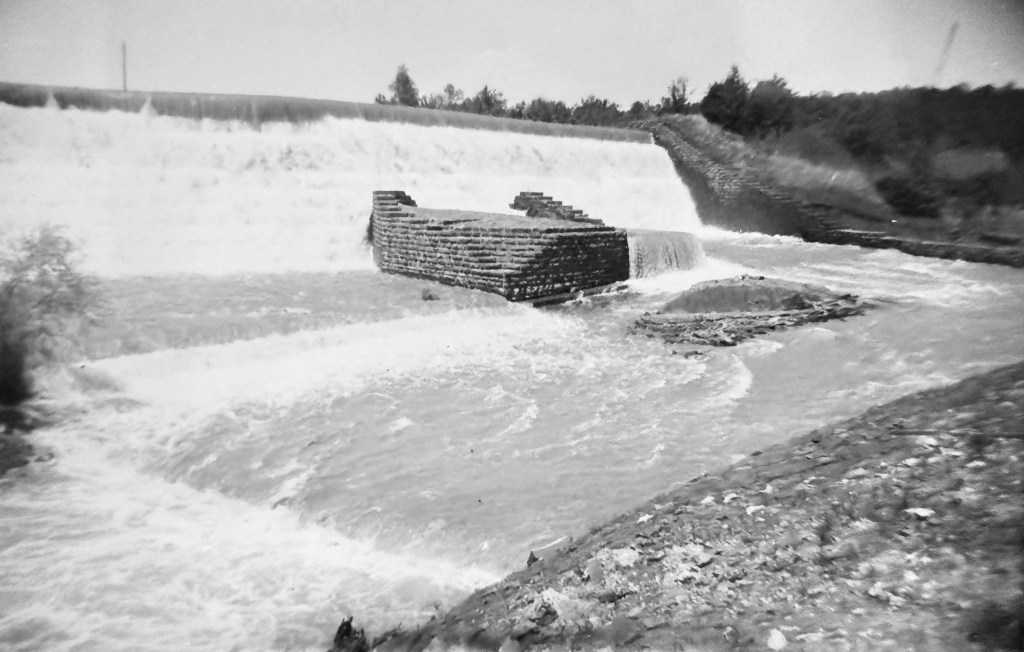
The dramatic photos below were taken by Joe Allison during a 1935 flood which nearly destroyed the original spillway. Historic photos courtesy of Okmulgee Public Library.
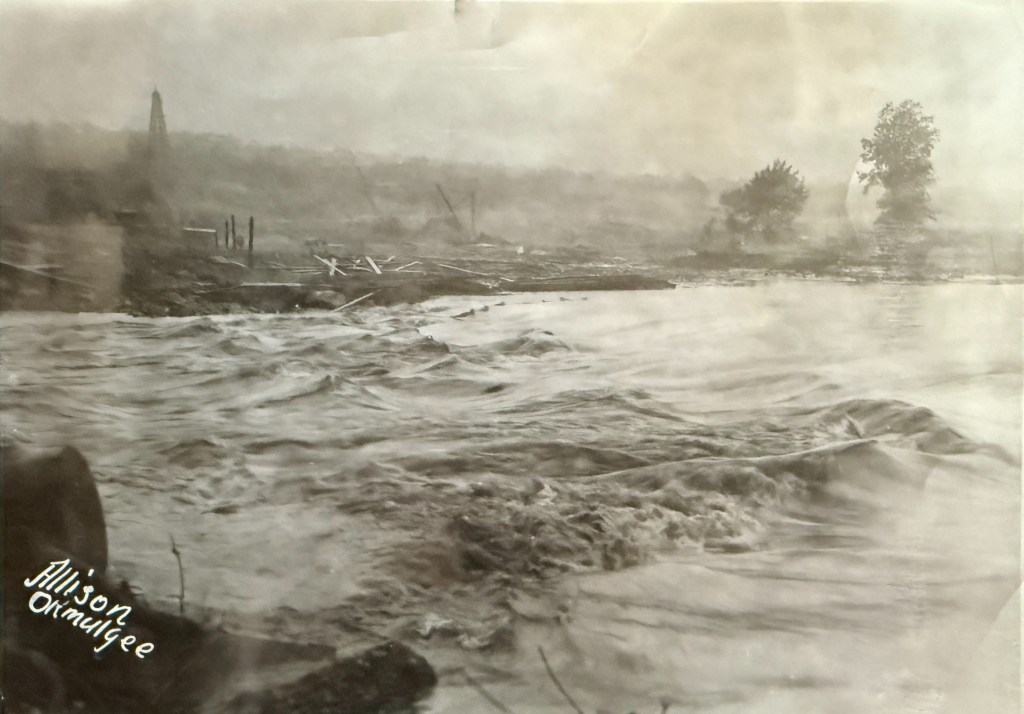
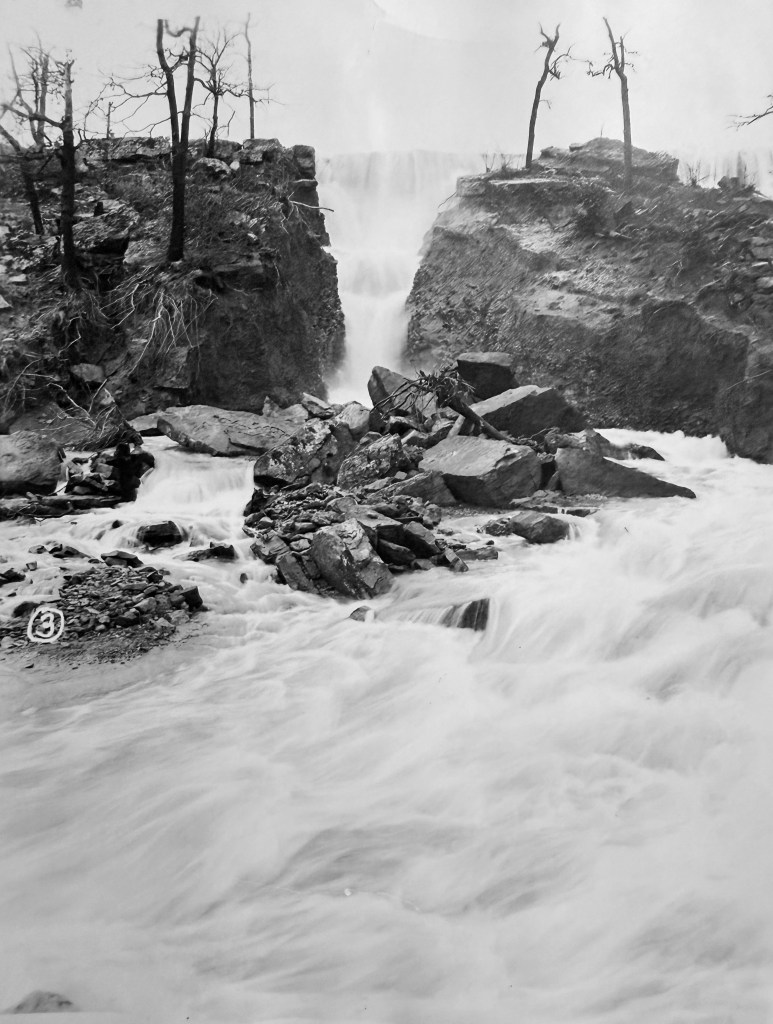
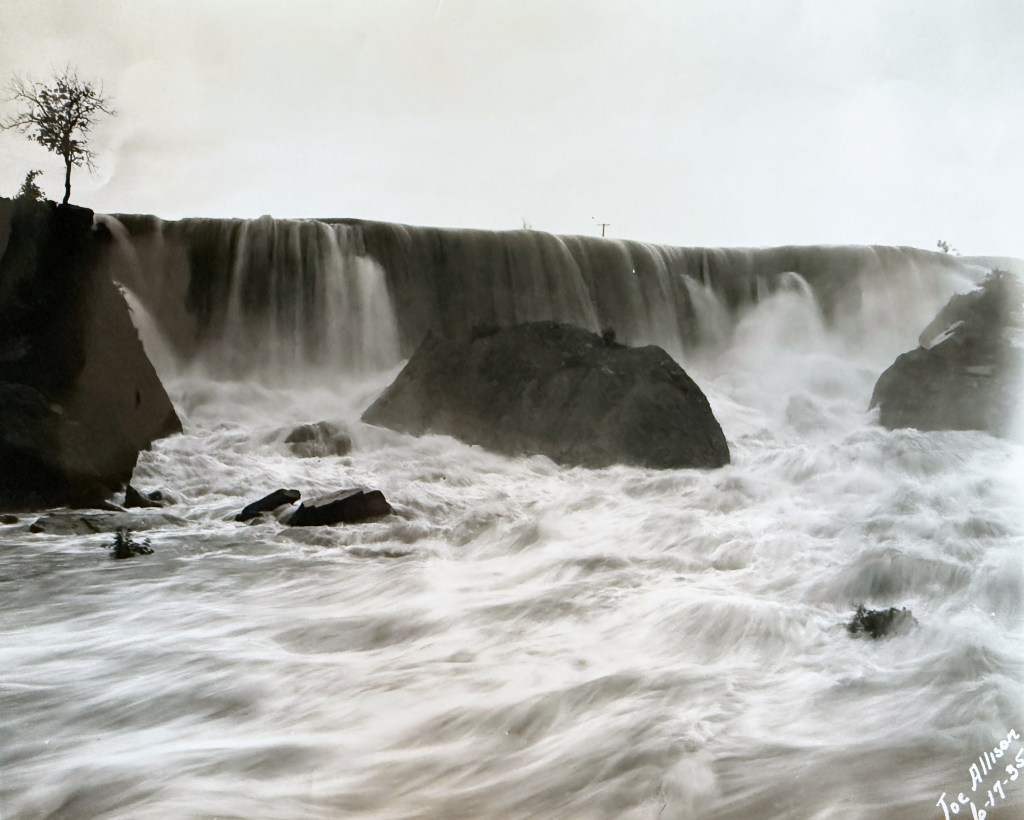
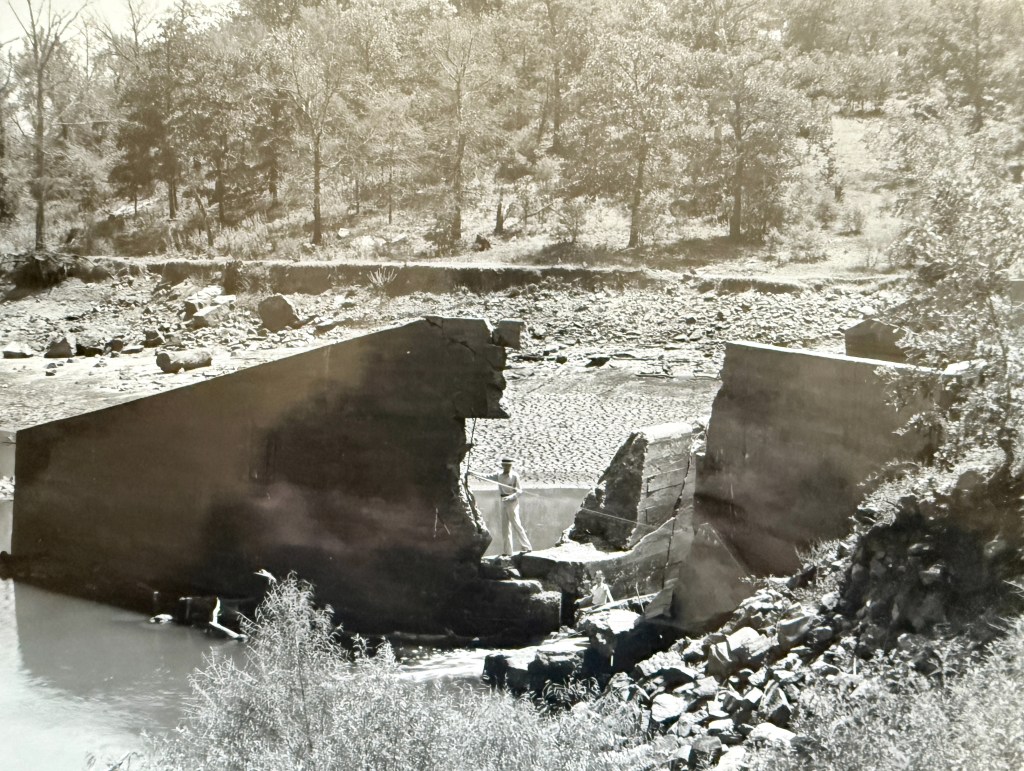
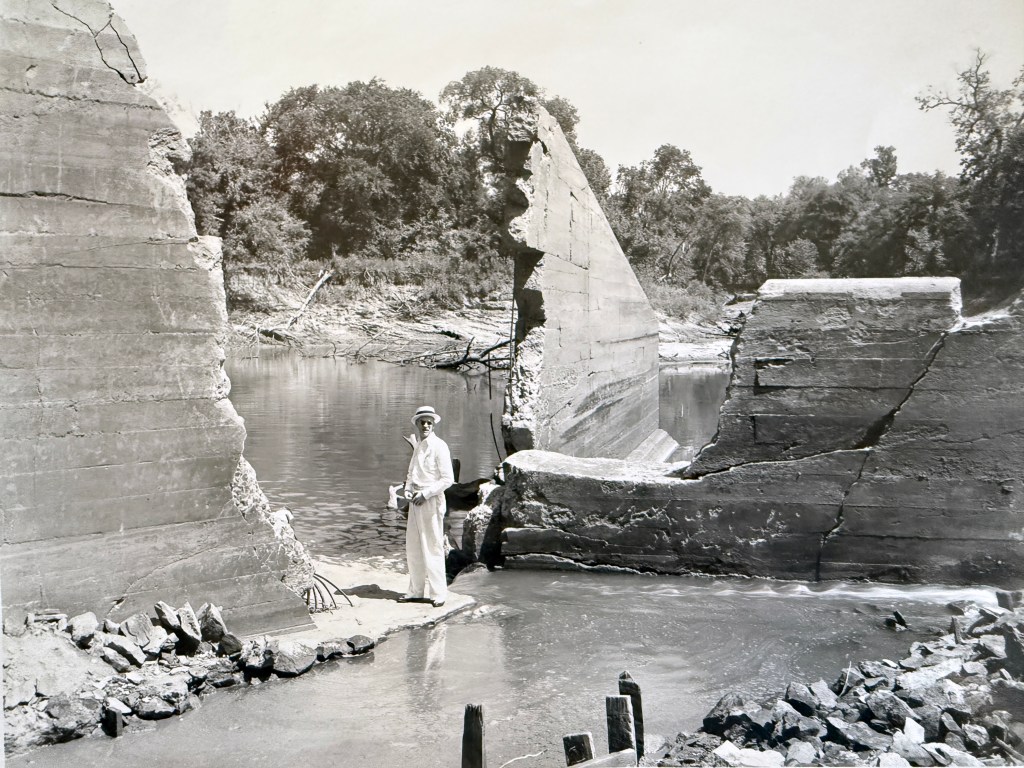
The undated photos below appear to display the aftermath of flooding. Historic photos courtesy of Okmulgee Public Library.
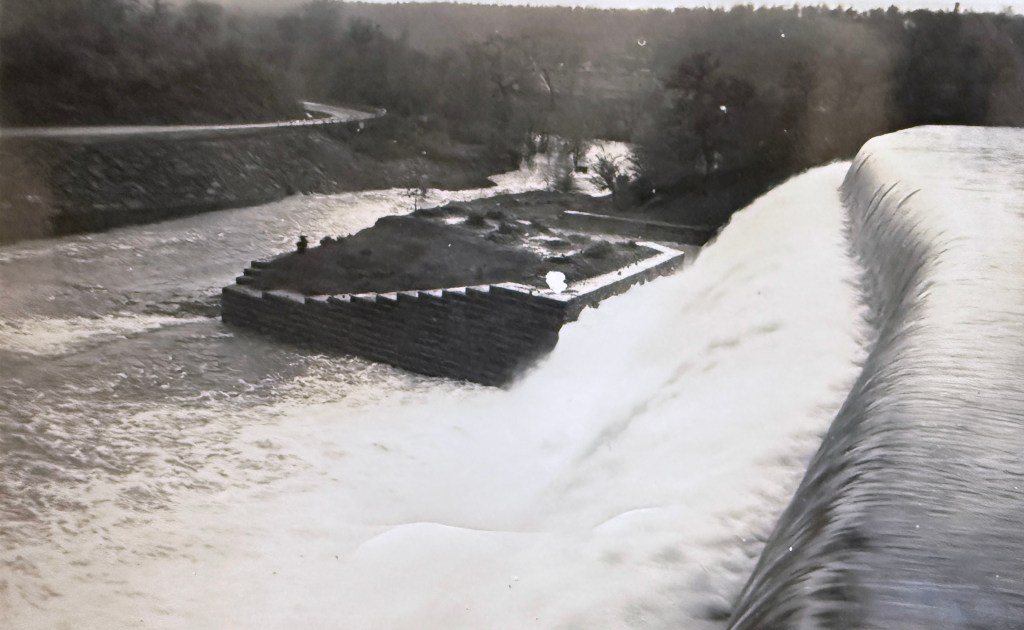
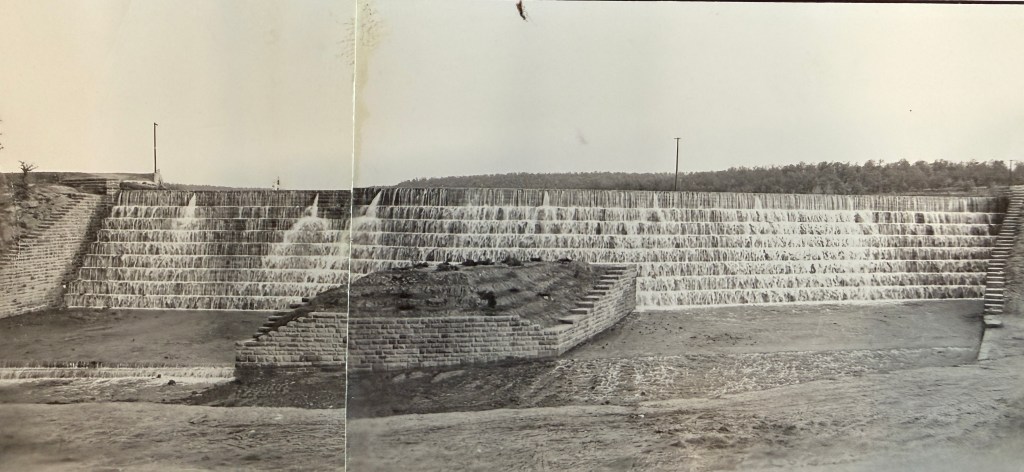
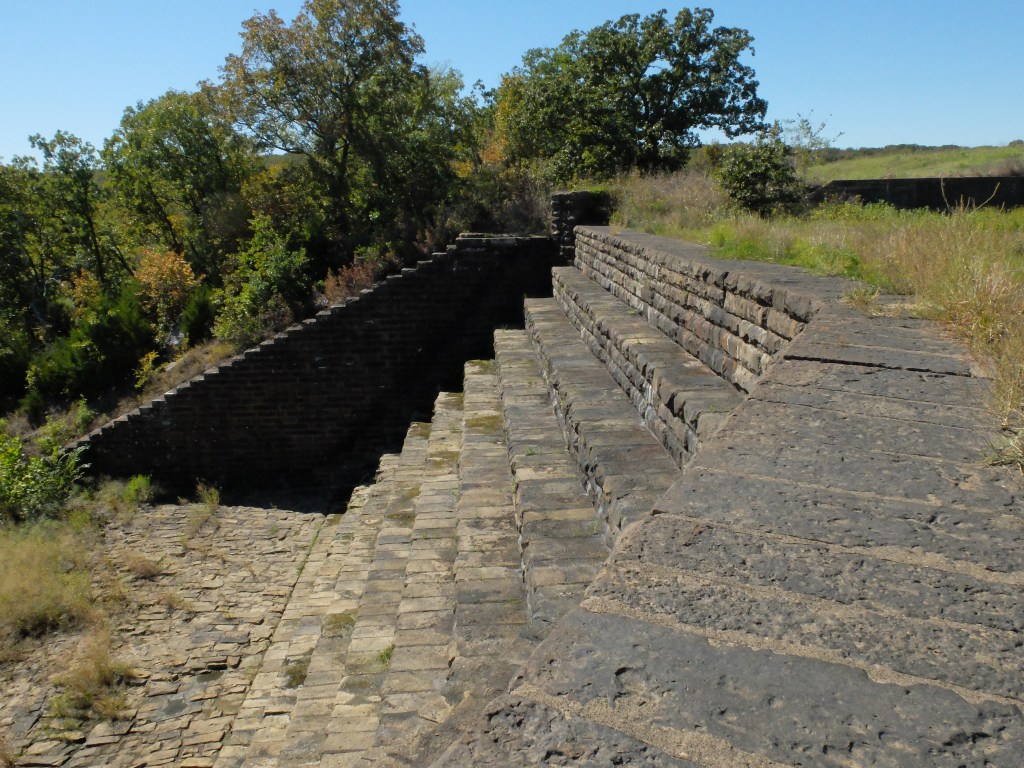
Below, early photos of the 1939-40 spillway, courtesy of Okmulgee Public Library. Built at a cost of $116,118 to the WPA and the City of Okmulgee, the spillway strengthened the dam with a buttressing wall of solid limestone. The 72 by 72 foot stone platform in the center supplies additional buttressing. Within the platform are large, flat stone blocks that once formed the top of the structure but have collapsed inside it. Cedar trees were originally planted on the rock-walled island but a flood in 1941 badly damaged the island, washing out the dirt fill. A five-foot high stone retaining wall serves to buttress the sloping creek bank that rises up to the roadway, ensuring that the highway will not wash out. The limestone blocks for the spillway were quarried across Highway 56 to the east of the dam. A 1939 newspaper article reported plans for a $50,000 swimming pool below the spillway but there is no evidence this was built. (No swimming was allowed in the lake at the time.)
Below, recent photos of the spillway
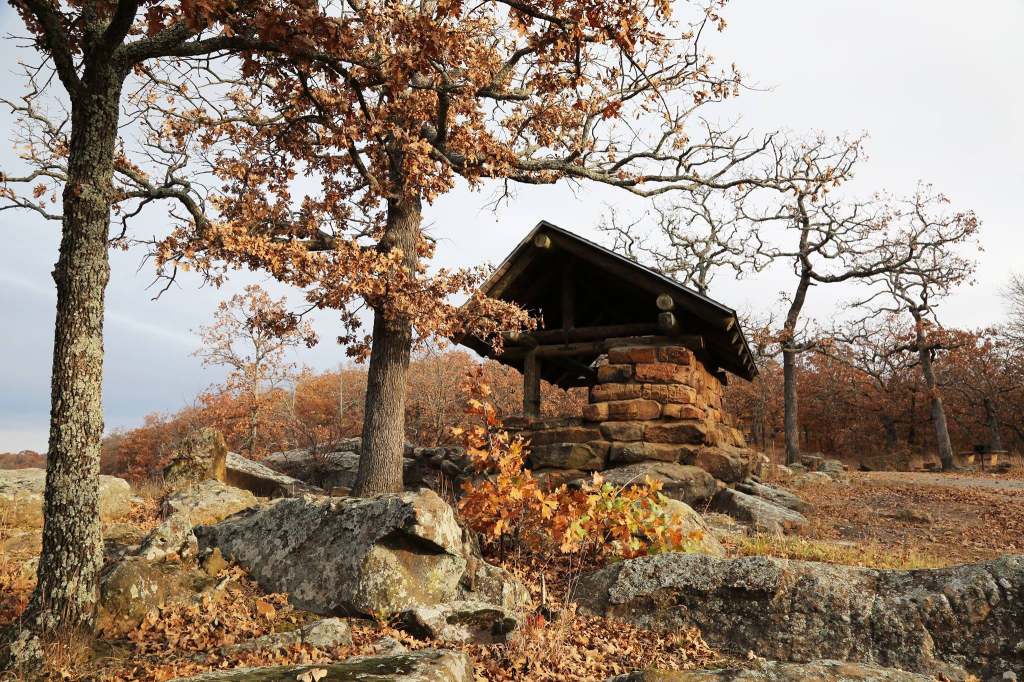
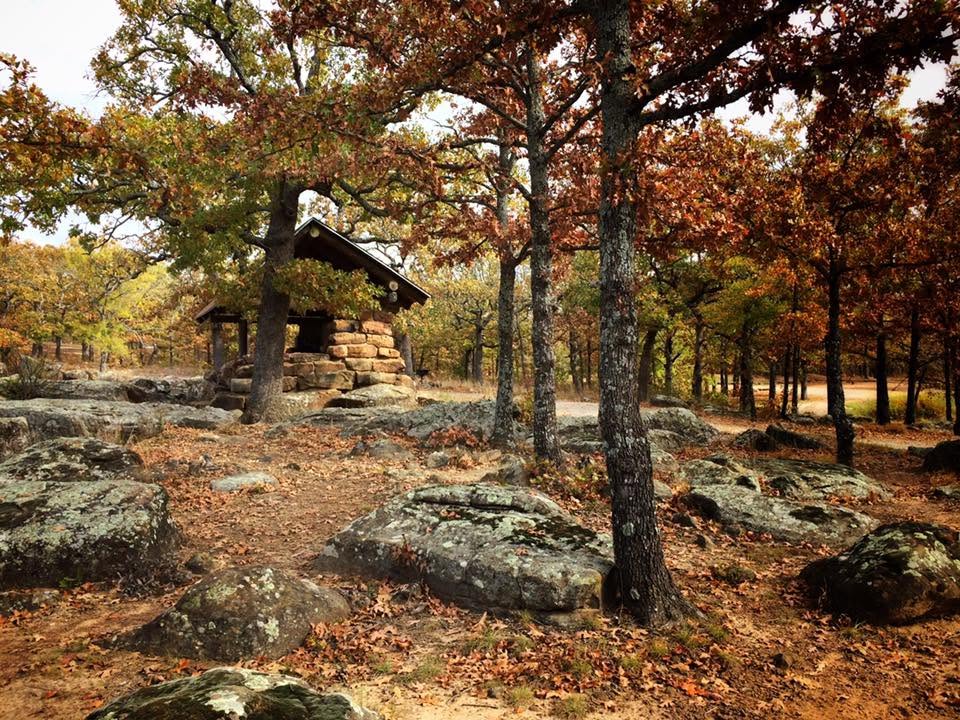
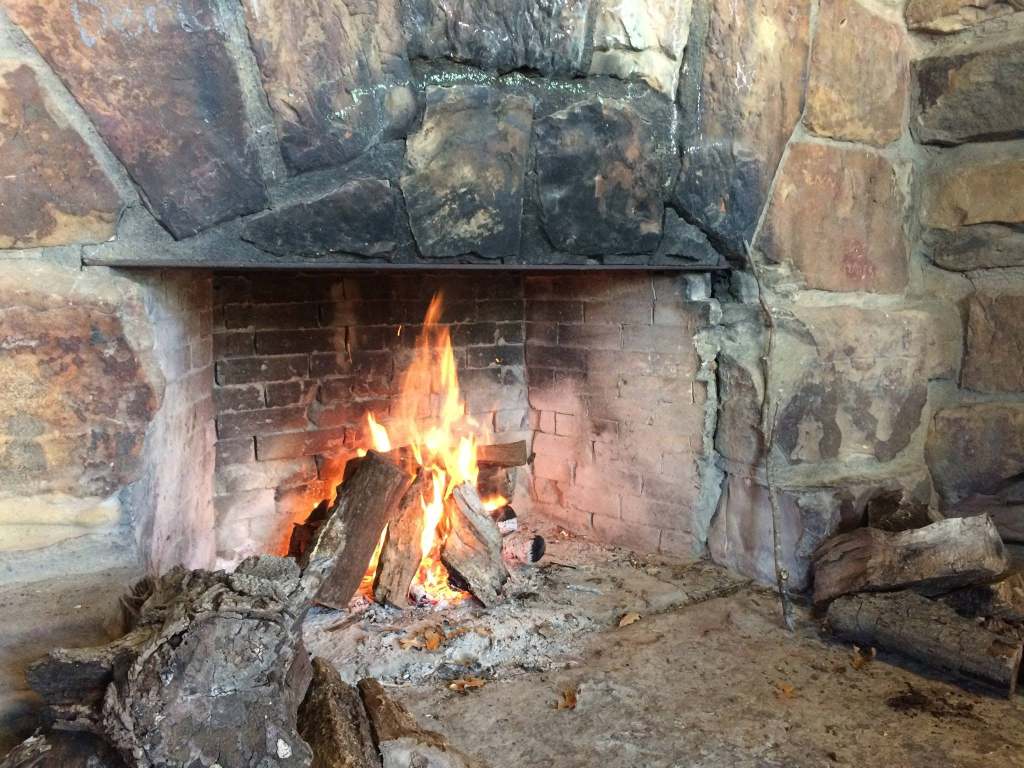
The Rock Shelters and Landscaping
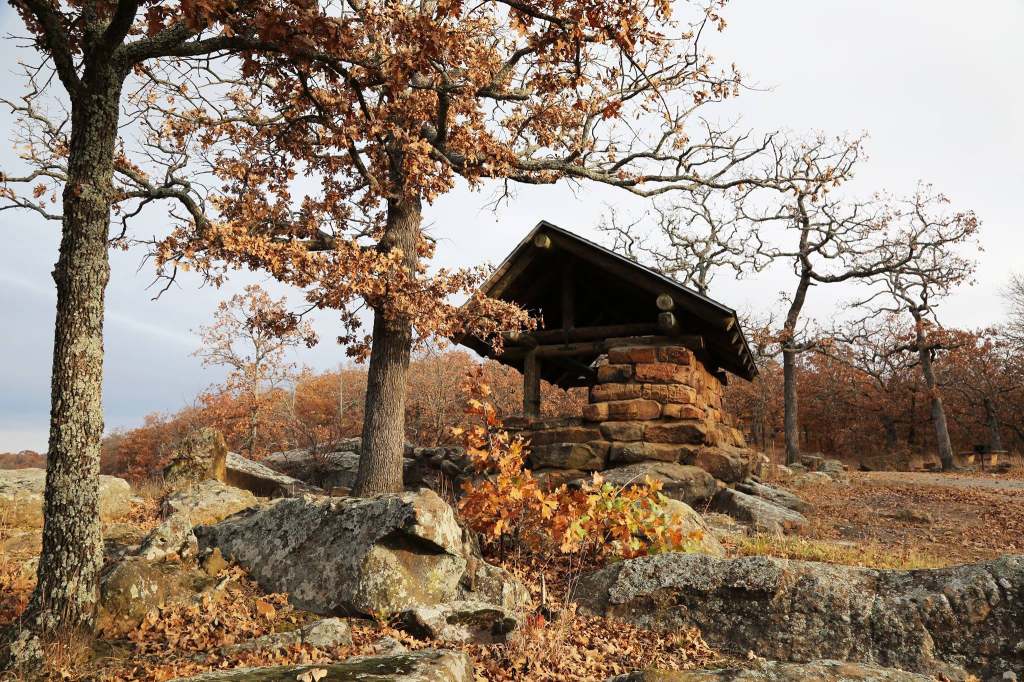
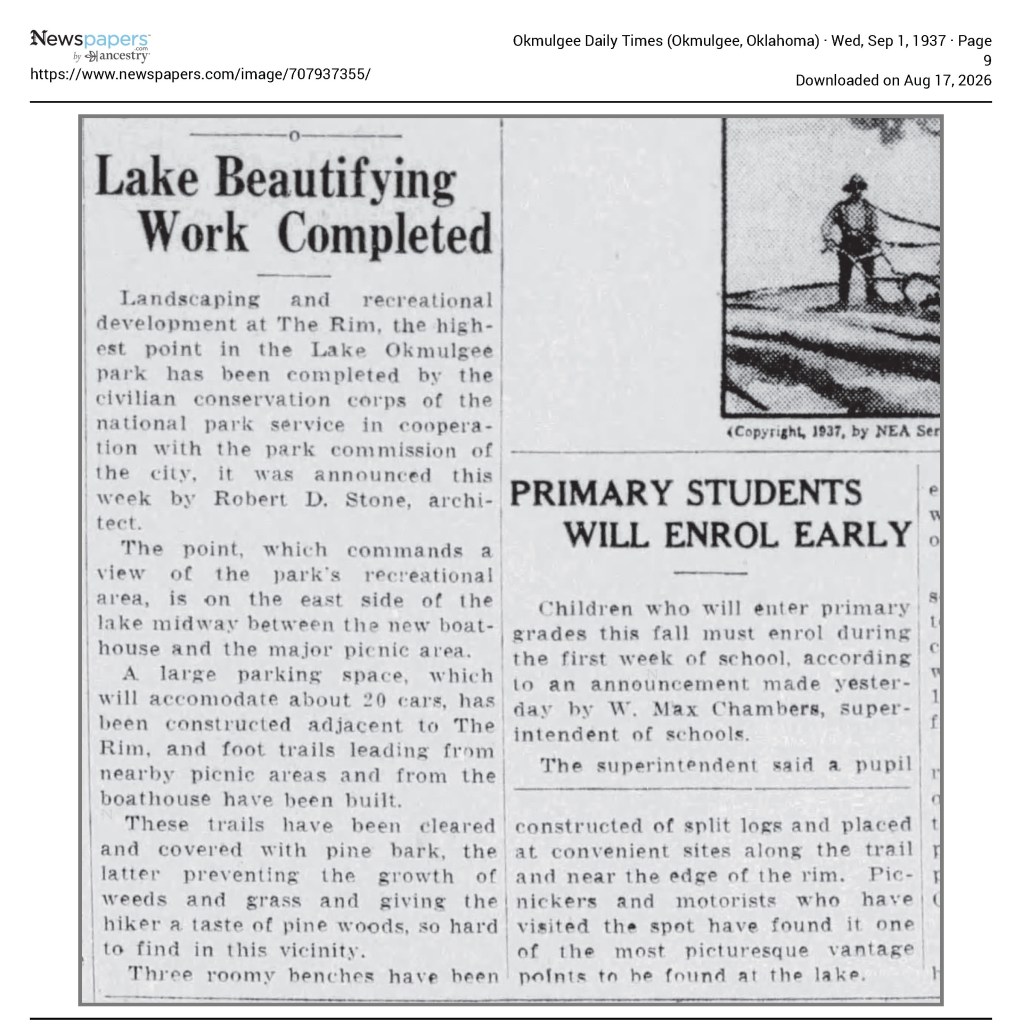
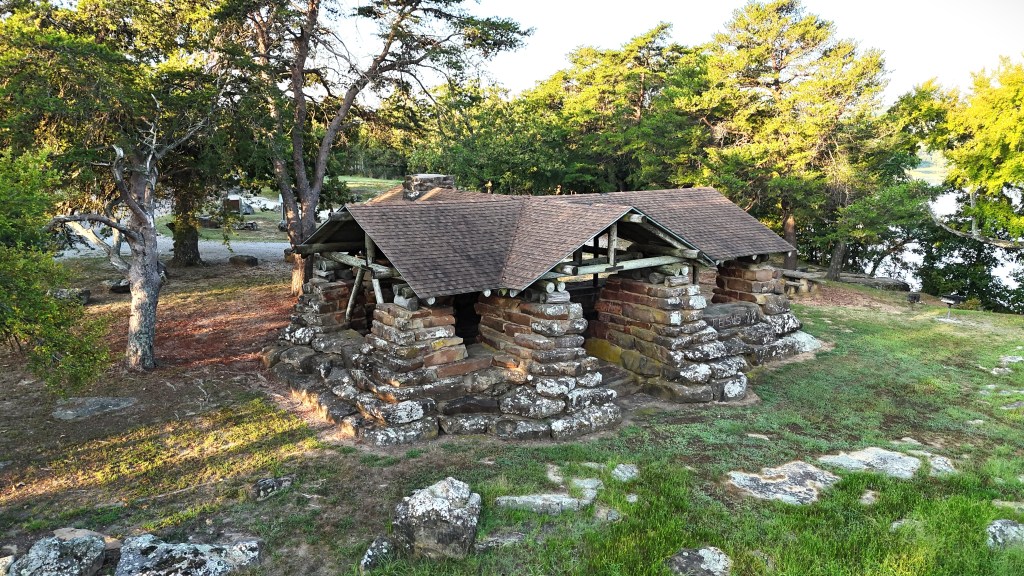
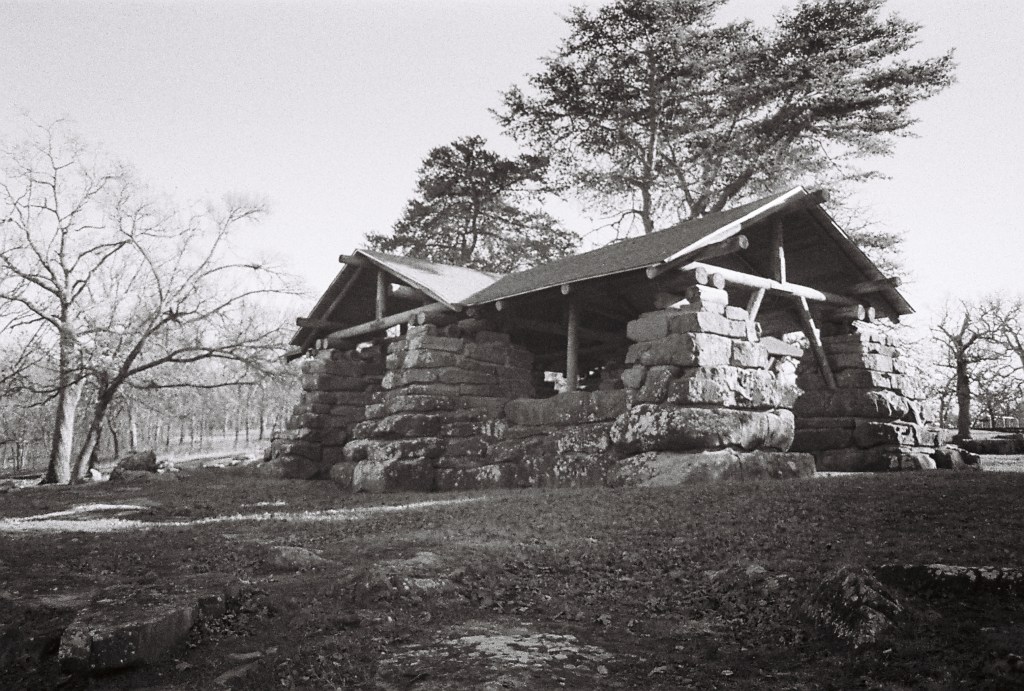
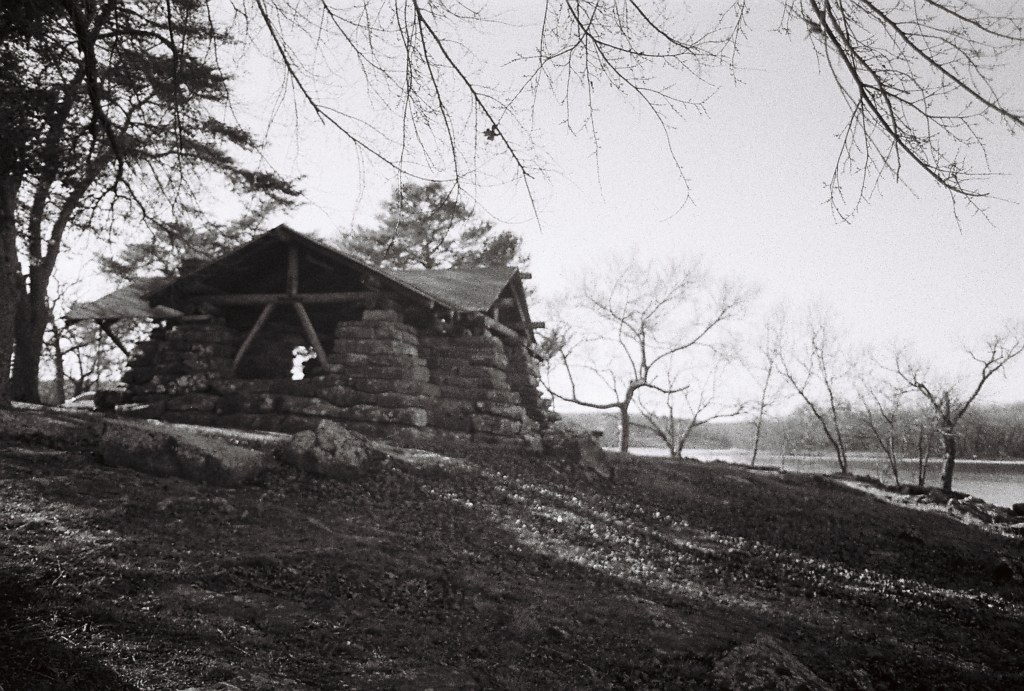
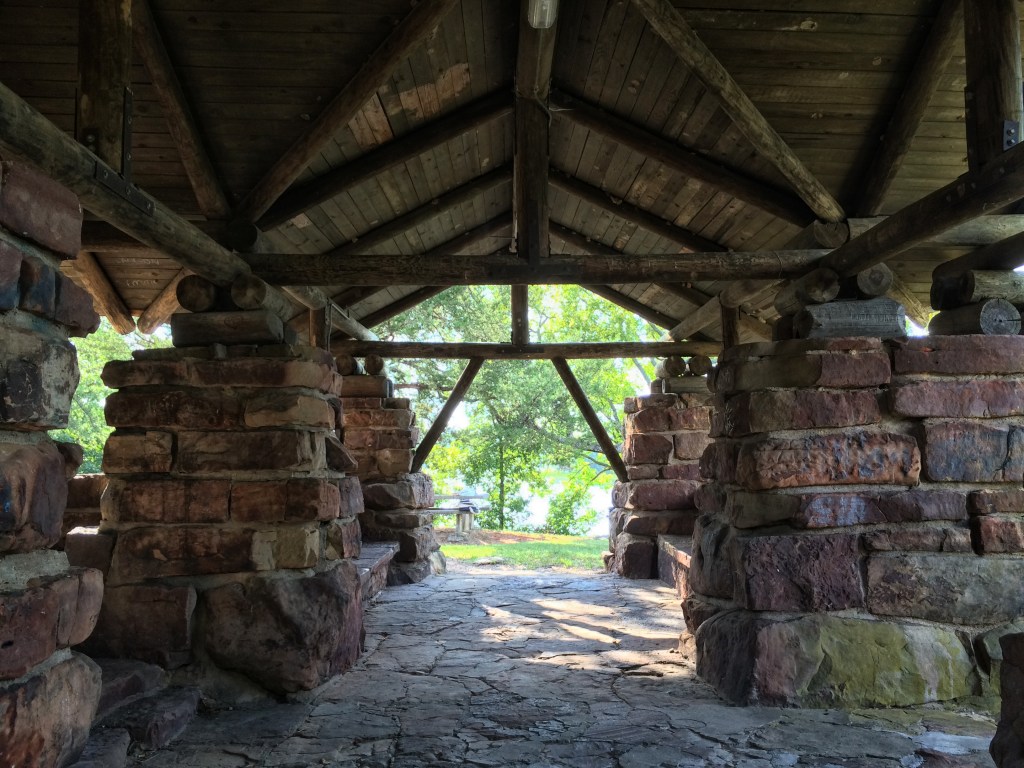
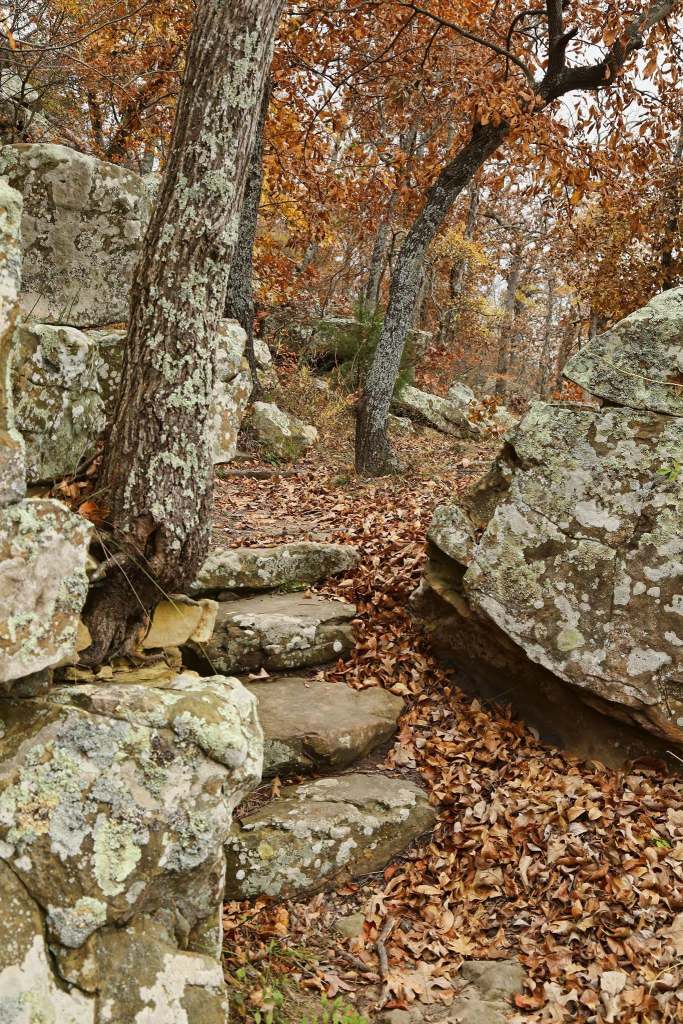
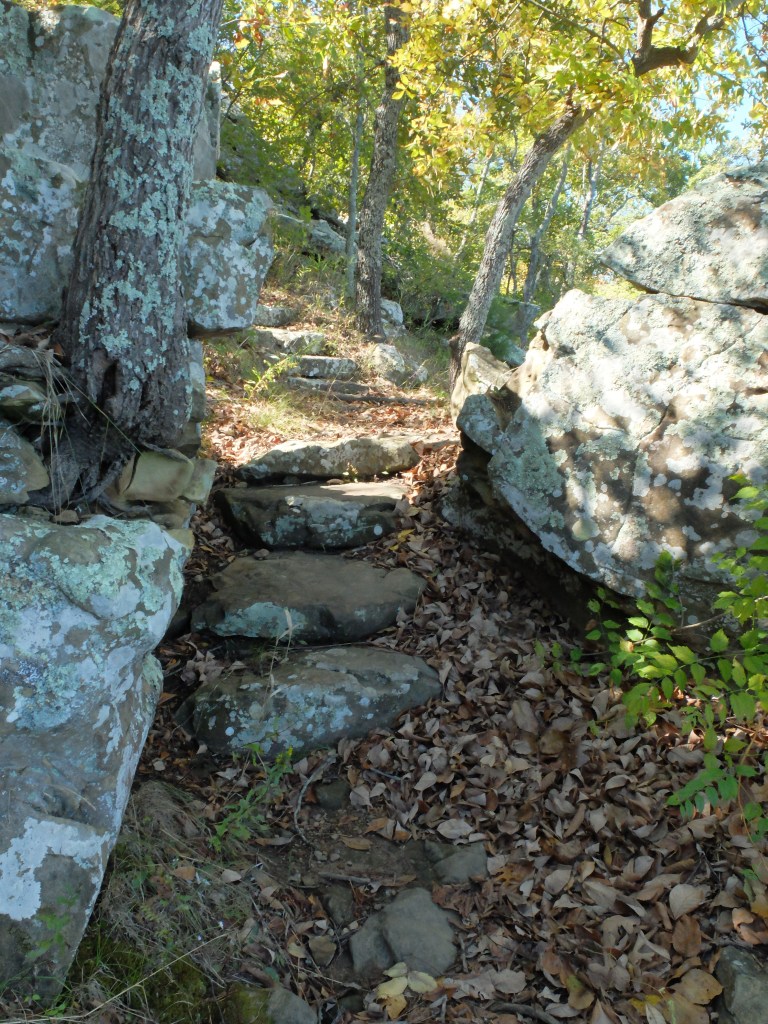
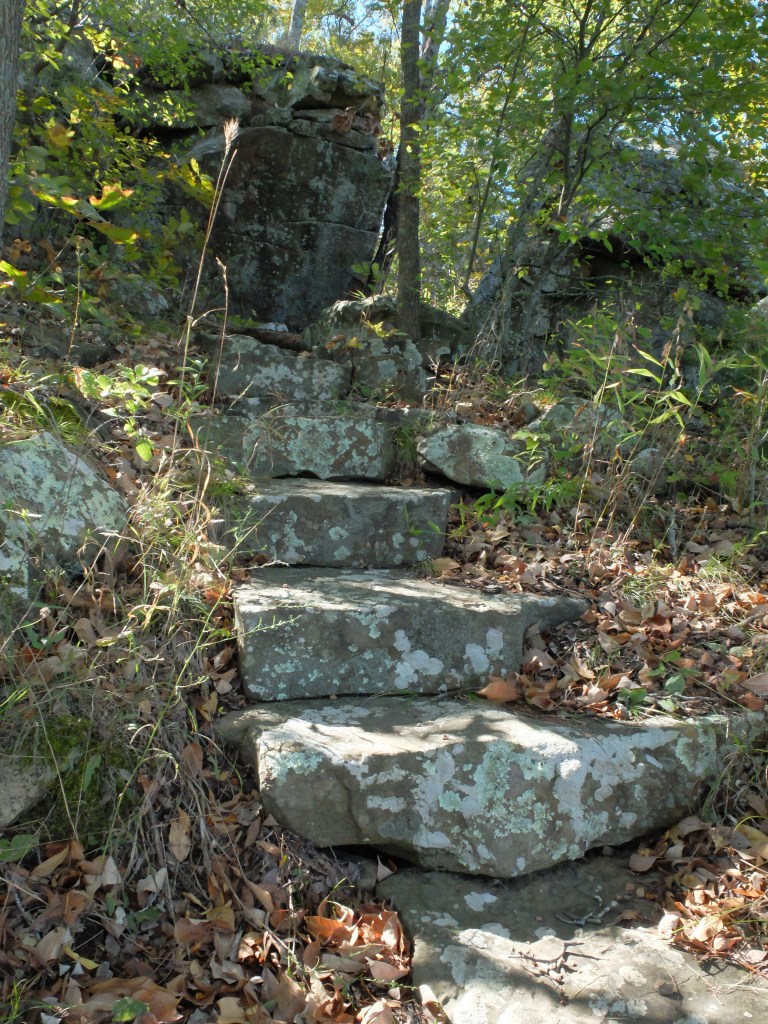
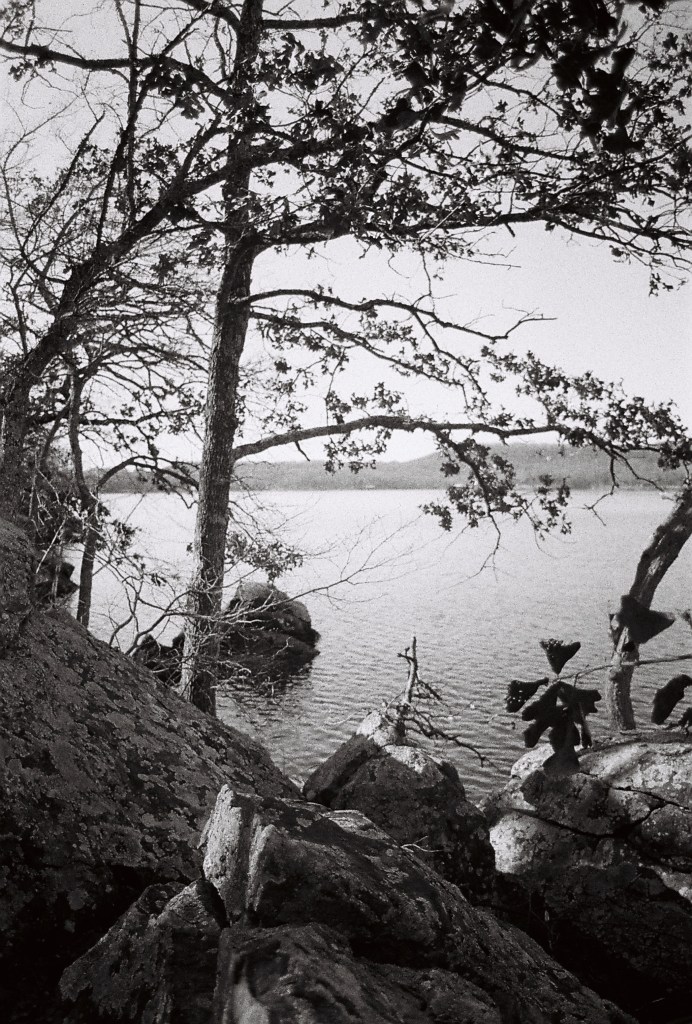
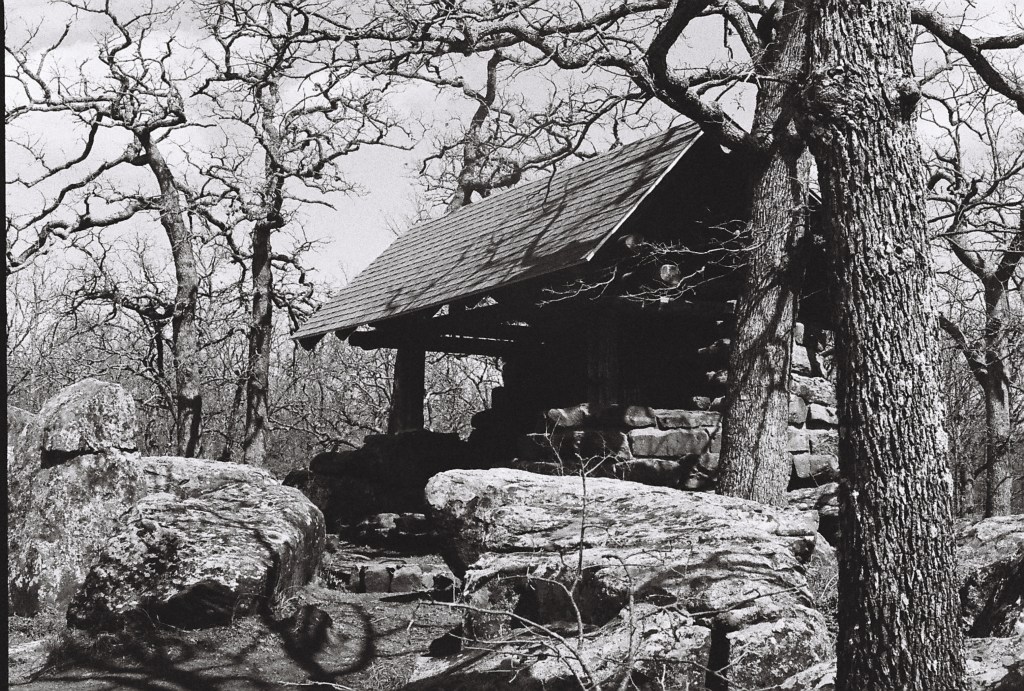
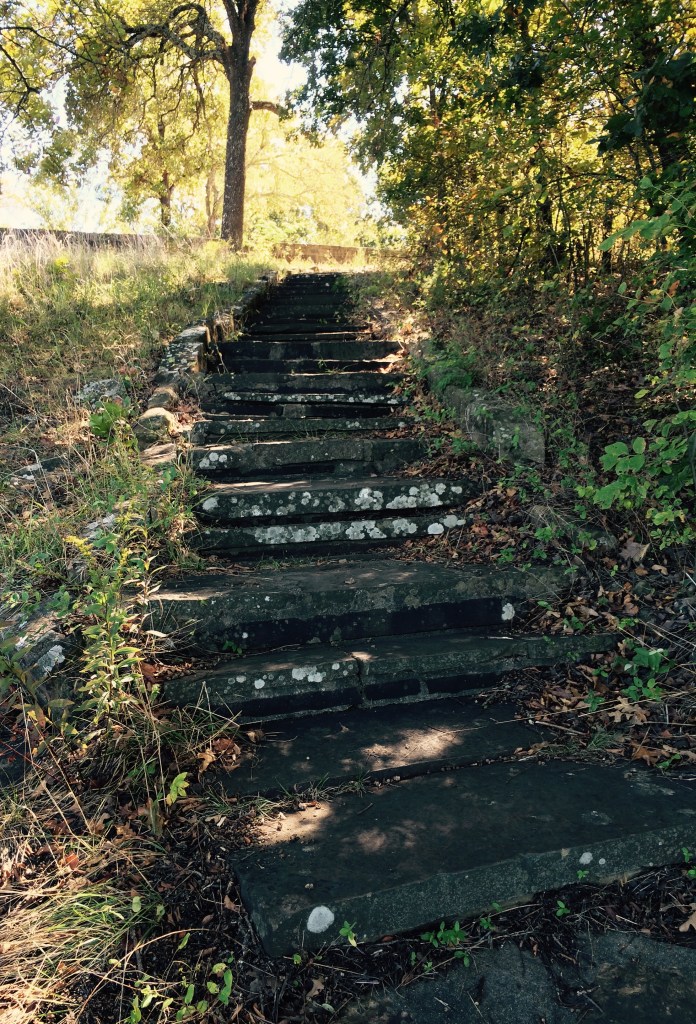
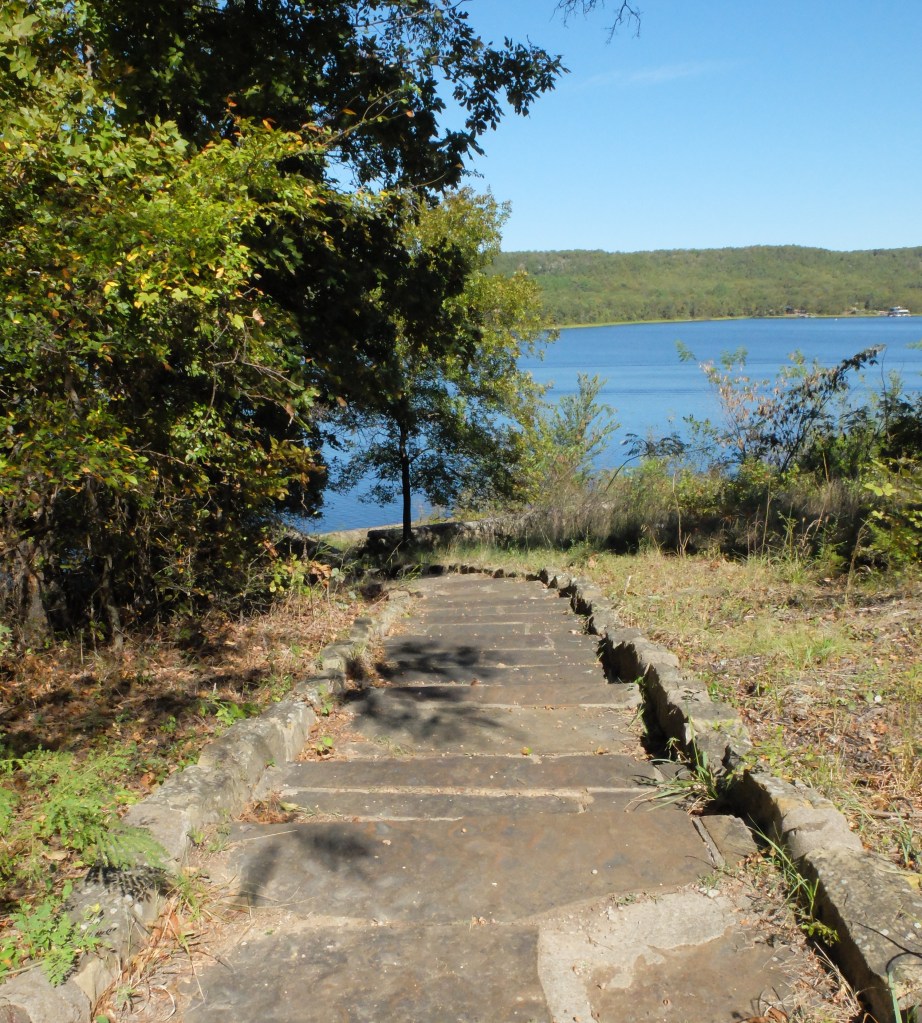
After the lake opened in 1928, the shoreline property, owned by the City of Okmulgee, was gradually improved for a park. During the 1930s, recreational facilities at the lake got a big boost when the Civilian Conservation Corps (CCC) and WPA made improvements. Using sandstone boulders and large timbers in National Park Rustic style, picnic shelters were designed to blend into the landscape. A 1939 newspaper article reported the presence of ten large stone, fireplace-equipped picnic shelters surrounding the lake, twenty-five picnic fireplaces, and thirty picnic tables. The CCC also built native stone picnic grills, walking paths, roads and extensive landscaping including natural rock stairsteps leading to “attractive woodland and boulder retreats,” such as the popular scenic overlook originally named “The Rim.” See September 1, 1937 newspaper clipping below.
The most notable remnants of all that effort are two shelters built by the CCC in what is now Red Oak Campground, the large one known as “Big Rock Shelter,” where generations of Okmulgeeans have gathered to picnic. The walking paths and stone steps are still in evidence as part of the Oak Leaf Trail, a 1.5-mile path from Red Oak Campground via “The Rim” to the Cliff House, aka Pin Oak Landing. An easier paved trail below The Rim provides an alternative route.
The Boathouse and the Cliff House
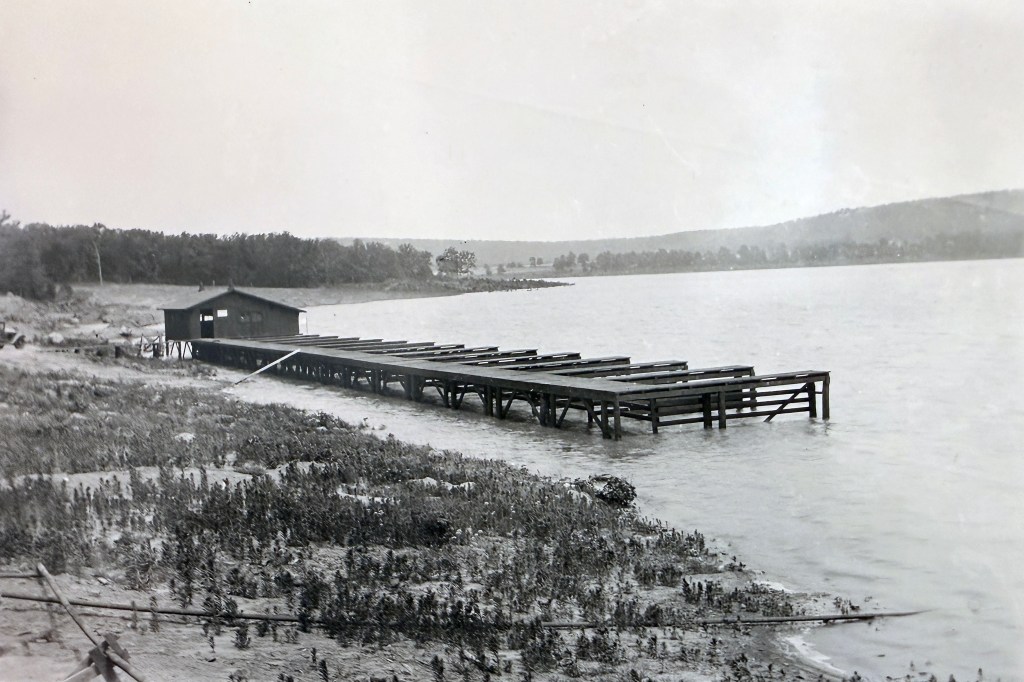
The photo below, courtesy of the Okmulgee Public Library, pictures the original boathouse at Lake Okmulgee. More infrastructure was added over time and in 1939, stone pilings replaced the original wooden ones. By that time, it had 22 slips, which included lockers that would hold an outboard motor, renting for $5 per year.
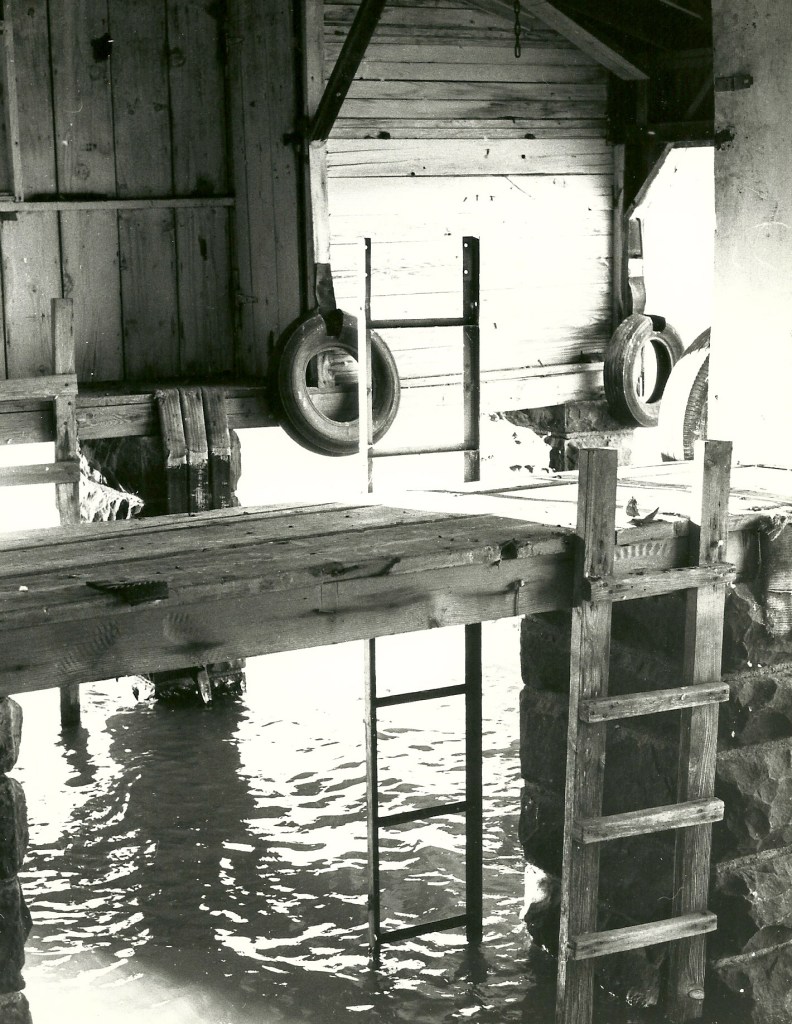
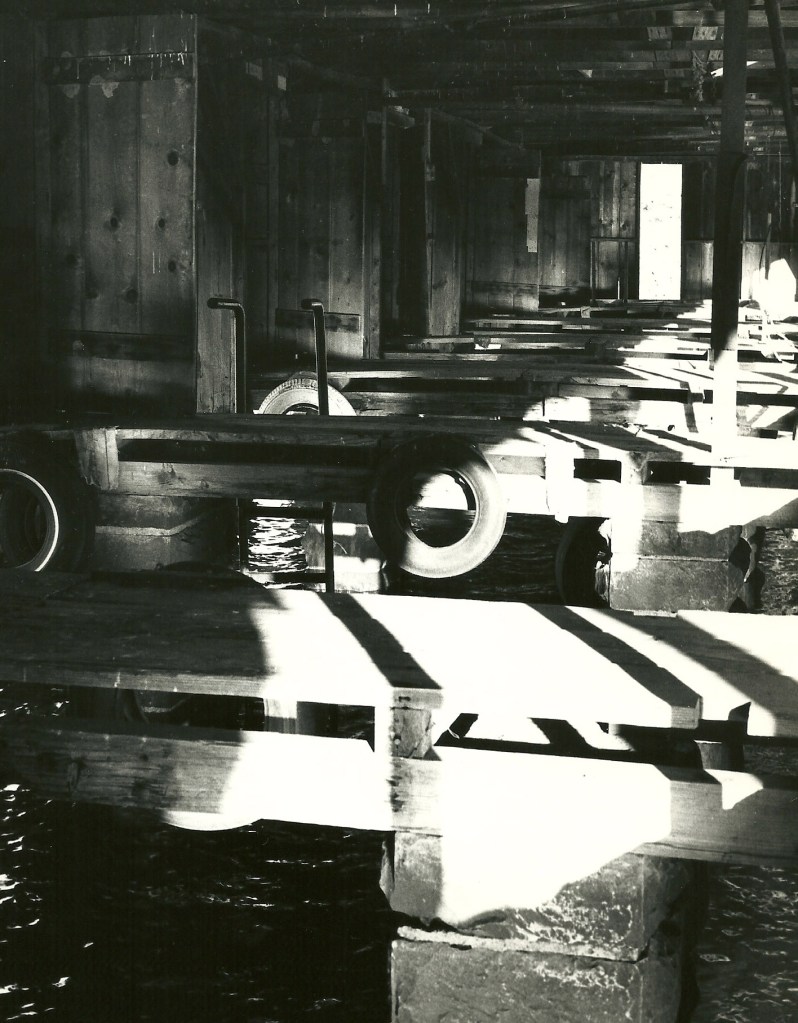
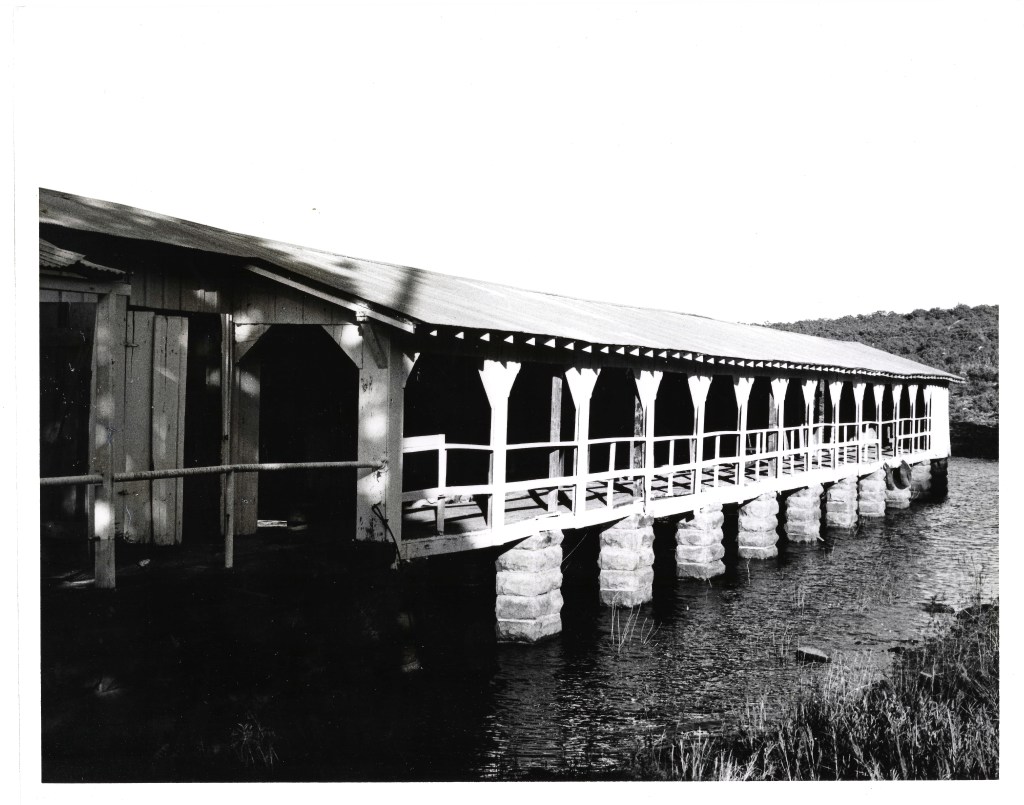
The photos below were taken of the boathouse around 1980. In the mid-80s an individual leased the boathouse and operated a store and boat rental there for several years. Sometime after, it was demolished.
The “Cliff House” was originally a large and elaborate second boathouse. Although the CCC was involved in its construction, they did not finish it. Because the CCC camp at Lake Okmulgee, established in July, 1935, was closed mid-project at the end of 1937, the city sought and received WPA help to complete the boathouse.
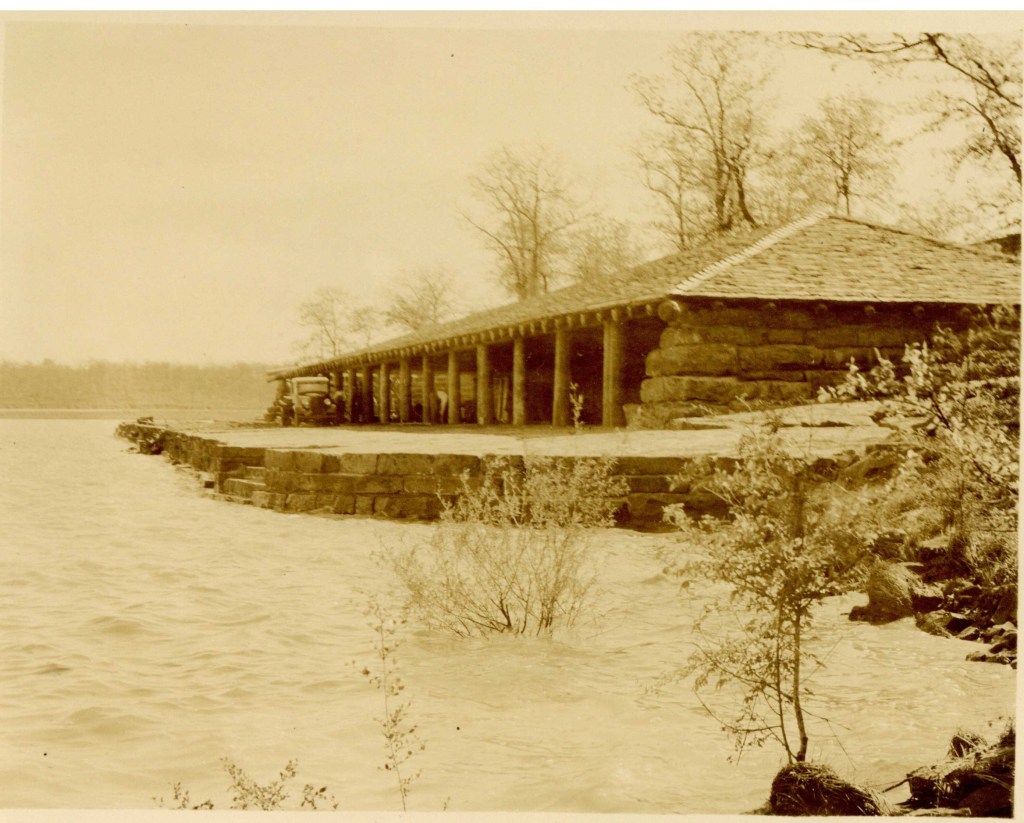
Plans called for two wings of stone with log rafters and heavy cedar shingles to comprise the building. Pine logs were imported from southwestern Arkansas through a local lumber company, while the stone was entirely native material. The main wing, housing 24 rental boats, would be 100 by 35 feet, with a shop and repair room, a public pavilion and shelter, and a caretaker’s room. The other wing would measure 213 by 35 feet, housing a concrete pool and private lockers, providing wet storage for 32 motor boats. A 300-foot retaining wall formed a wharf floored with flagstone. Landing ramps, approach walks, steps, a parking area and approach road were all part of the plan as well. A dolly was used to haul the boats from their place in the building to the edge of the wharf, where they were lowered to the water by a winch also used to lift the boats from the water. Whether the final structure was quite this elaborate is unclear.
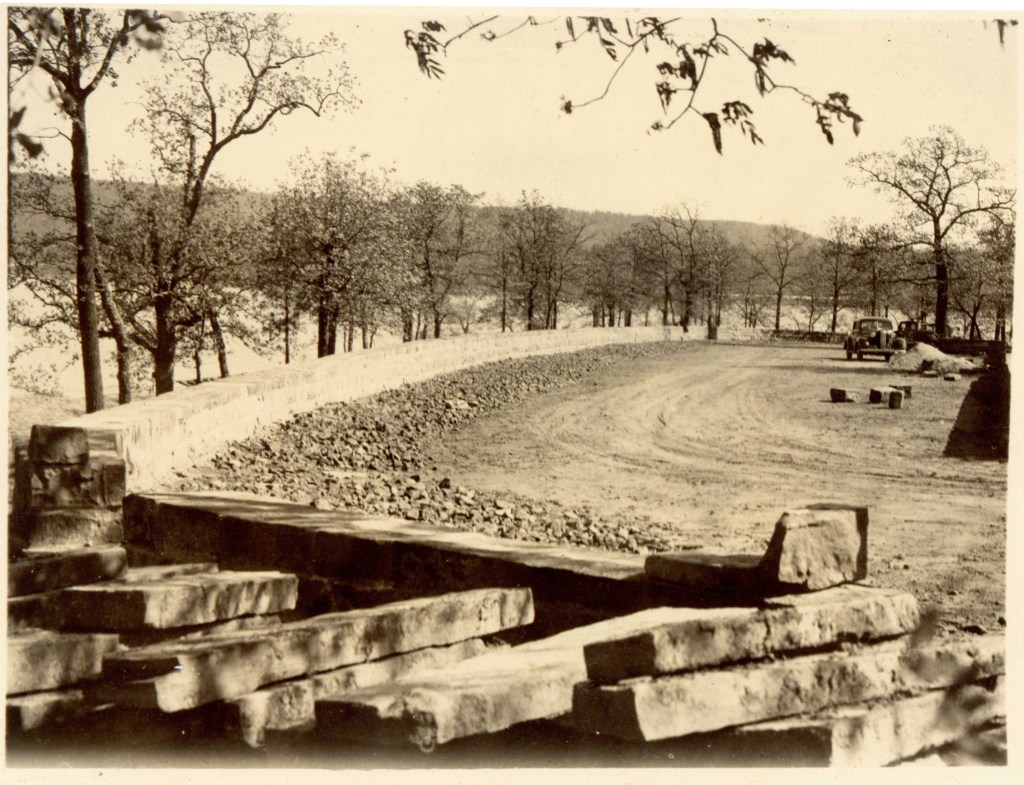
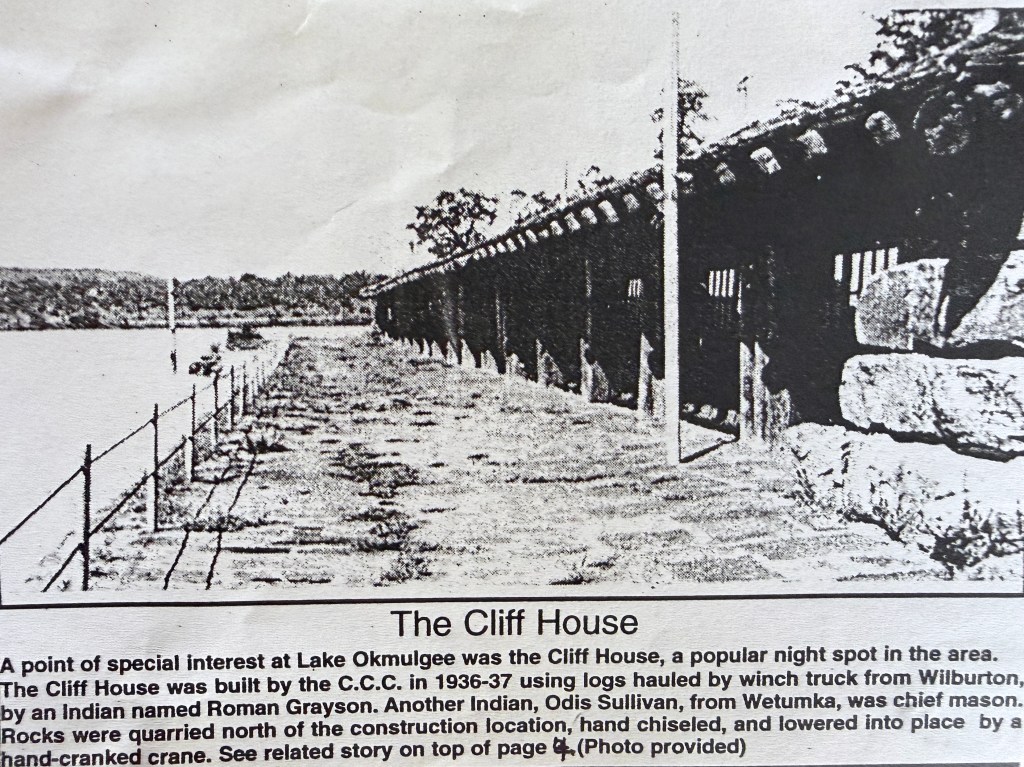
The boathouse opened in the spring of 1938, with a concession granted to Mrs. Viola Booth to operate a dance hall in the boathouse. She planned to build a dance floor over the stone floor and sell soft drinks and sandwiches, furnishing music with a nickelodeon.
The next year, trouble arose when the boat landing slid into the lake. The boathouse had been built between the lake shore and a precipitous bank on a site cut into the hillside. The portion of the wharf and the stone retaining wall that caved in and slipped off had been built on rock and dirt fill between the hillside cut and the water’s edge. In the original construction, no piles had been sunk, nor had the retaining wall been cemented to a natural rock foundation. The reasoning for this in hindsight was that sinking piles was costly and, at the time the retaining wall was built, the lake was high enough that construction of dams would have been required for CCC workmen to get down to a natural rock foundation. The repair, begun at the end of 1939, involved making a rock fill in front of the retaining wall to prevent further sliding and then re-filling behind the retaining wall to bring the wharf back to the level of the boathouse floor.
From the time of its opening to the early 1950s, the Cliff House was a popular night spot, an event venue for various local organizations and the centerpiece of social life at Lake Okmulgee. Dining and dancing was all the rage in those days, with Harry Vann’s 8 pc. orchestra featuring Jimmy Hawkins, vocalist; Bob Alspaugh’s (Tulsa’s Leading) 9-Piece Orchestra; and other popular entertainers.

The Cliff House collapsed on June 12, 1957. Legend has it that its demise was triggered by a lightning strike which ignited a fire. The newspaper reported that the structure had been condemned six months before its collapse. Plans to repair or rebuild were abandoned and the wreckage was cleared shortly. The space where the Cliff House stood was to be used as a picnic ground, the lumber from the building to be converted into picnic tables and benches.
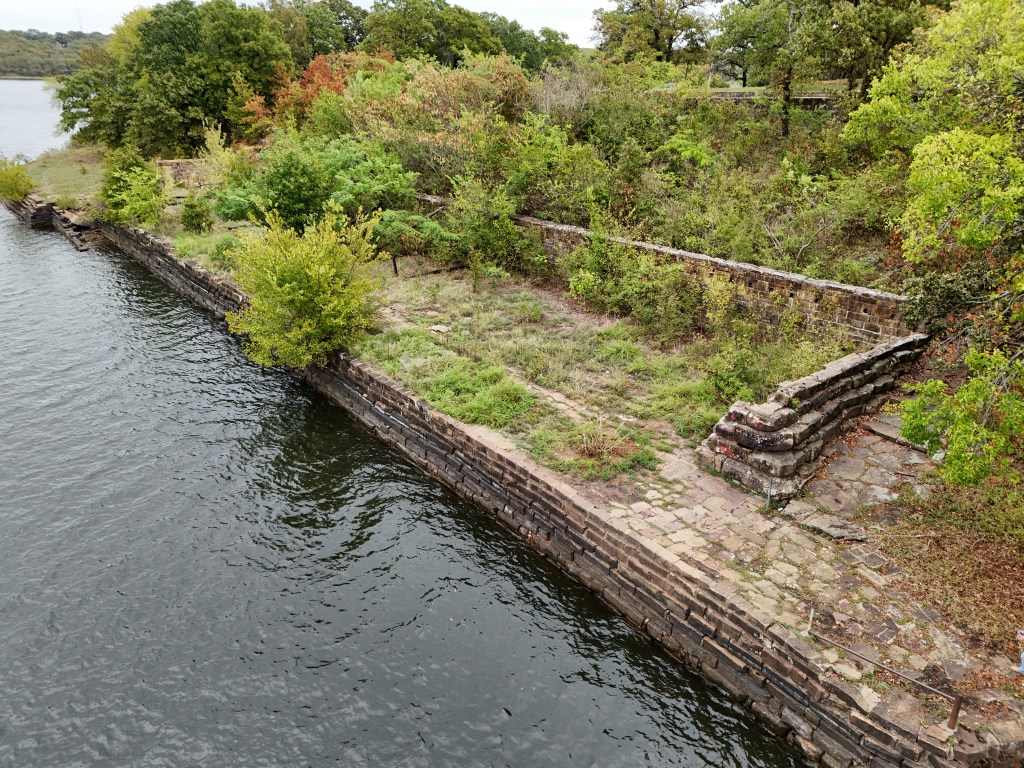
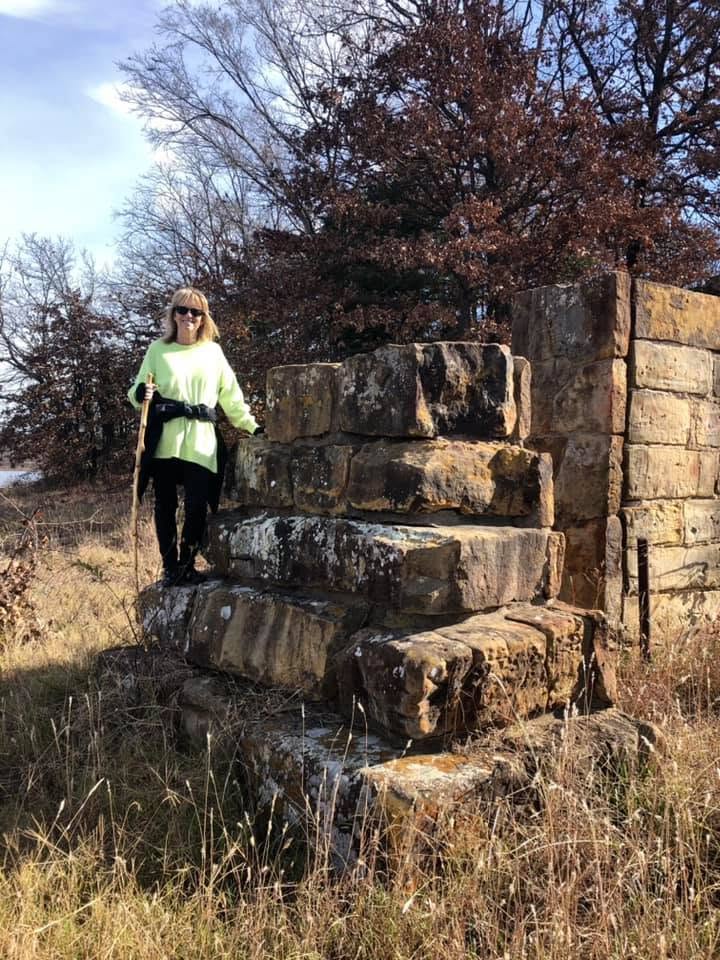
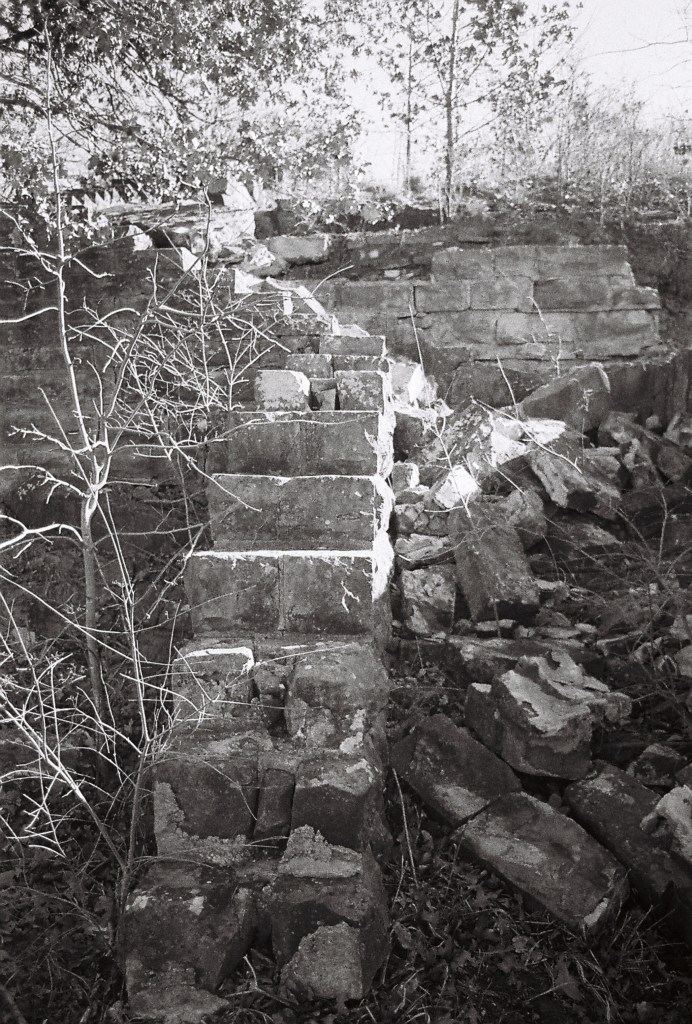
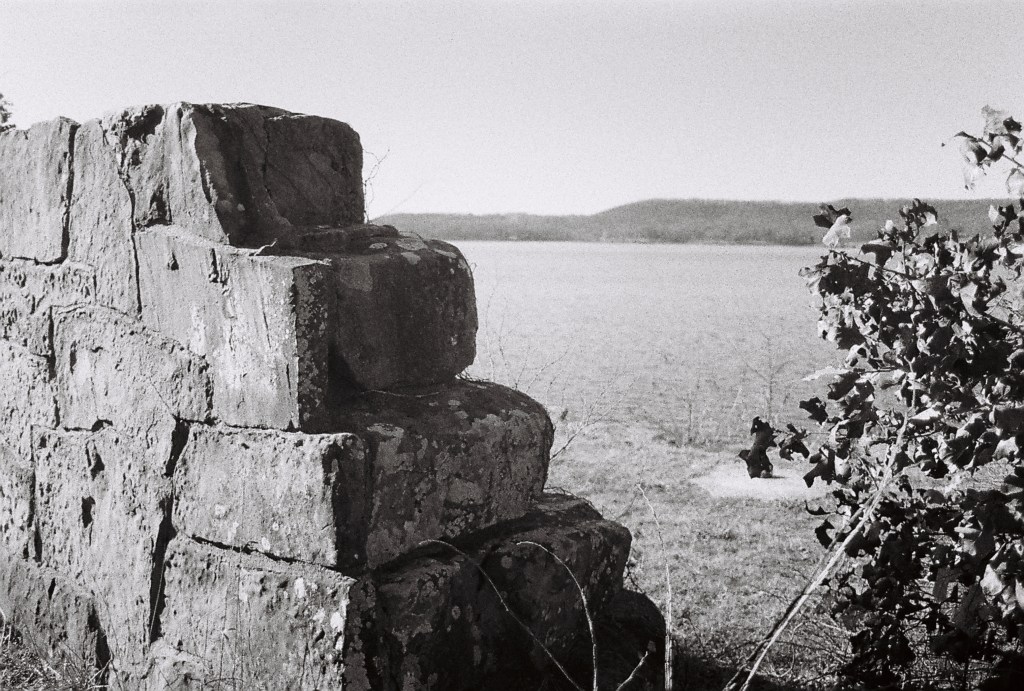
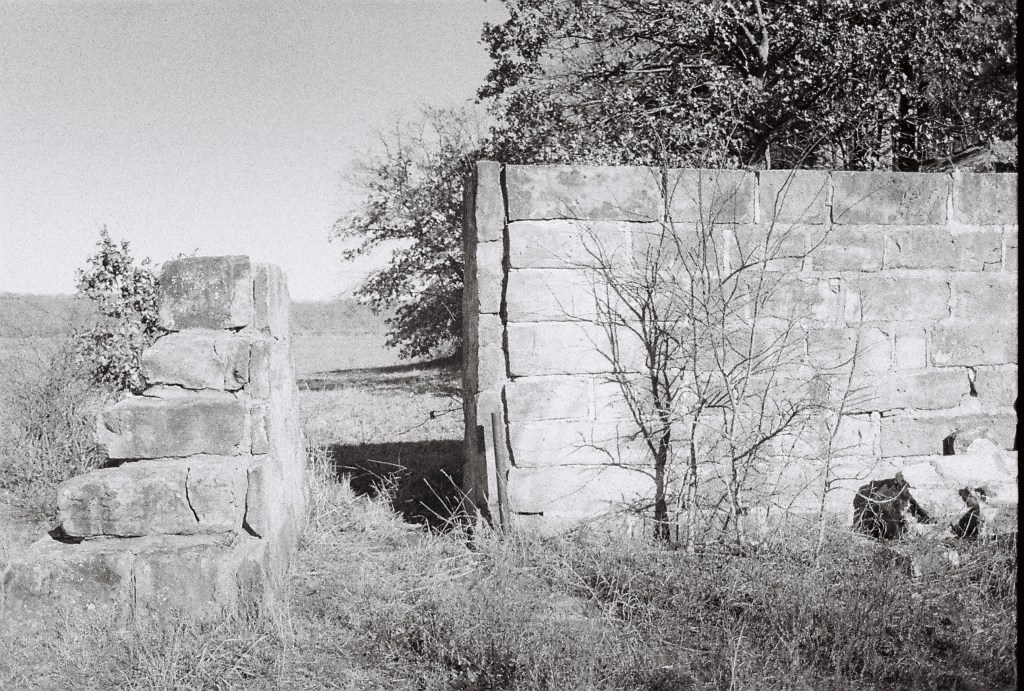
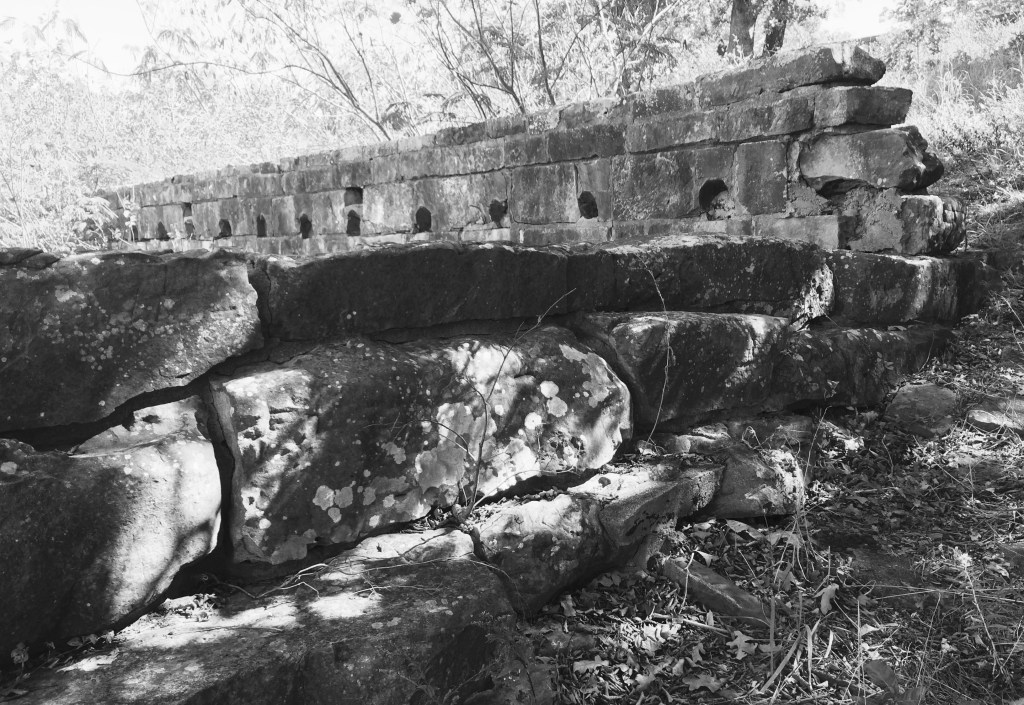
Nearly seventy years later, much of the stonework remains, including walls, stone steps, the floor and decorative pillars. The retaining wall against the hillside is finally collapsing in spite of large timbers placed to support it some time ago, perhaps twenty years or more. The stones in the wall were numbered with paint, suggesting at some point there was a plan to take down the wall and restore it.
Today its existence is a mystery if you stumble upon it at the end of the hiking trail. The expanse of stone and elaborate rockwork begs the question, “What was this place?” What a rich history we find when we discover the answer.
Spillway NRHP: https://okshpo-share.com/NR_Record/681
Okmulgee State Park: https://www.okhistory.org/shpo/archive/newdealparks.pdf
Okmulgee Lake Rising: https://susandragoo.com/2016/11/14/autumn-in-the-crosstimbers/


Leave a comment